Operations | Monitoring | ITSM | DevOps | Cloud

Sponsored Post

The Importance of Observability for Site Reliability Engineers (SREs)

Site reliability engineers (SREs) play a crucial role in ensuring the reliability of systems. From creating software to improving system reliability in production, responding to incidents, and fixing issues, SREs are responsible for guaranteeing the health of applications.. And observability helps support SREs'. Because an observable system allows them to identify and fix issues promptly, resulting in SRE's being better equipped to fast-track development cycles.

Sponsored Post

What's a Status Page Aggregator and why you need one

Welcome to the future! SaaS (Software as a Service) rules the world. When just a few years ago businesses were buying software and installing it in-house, now they're renting it. There's a SaaS for everything. Actually, multiple SaaS for the exact same problem! Even technology companies with expert engineering teams are choosing to use off-the-shelf components (now in the form of SaaS) instead of developing in-house. It makes complete sense to buy something that would cost 100x more to develop in-house.

An MSP's Guide to Quarterly Business Reviews

Quarterly business reviews (QBRs) are one of the best tools you can use when it comes to being transparent and keeping your clients updated on all the work you’re taking care of for them. Otherwise known as technical business reviews, or semi-annual business reviews, QBRs serve as an excellent opportunity to touch base with clients, highlight the value of the services you provide, and create a strategic agenda moving forward.

8 Secret Struggles Today's MSPs Are Dealing With

In the managed services industry, there’s no shortage of support. Whether online or in person, there are countless ways to connect with other MSPs, share stories, and provide tips and tricks to help you build your business—and overcome MSP struggles and biggest challenges. And while MSPs are willing to share industry trends they’re taking advantage of, they’re not always willing to talk about the ones they’re losing sleep over.

TL;DR InfluxDB Tech Tips: Joins

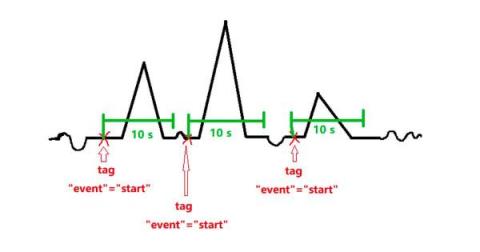
If you’re an InfluxDB user you’ve almost certainly used the join() function. The join() function performs an inner join of two table streams. It’s most commonly used to perform math across measurements. However, now it is deprecated in favor of the join.inner() function which is part of the new join package. With the addition of the join package, Flux now has the ability to perform the following types of joins: A visualization of different types of joins from this article.

VictoriaMetrics Monitoring

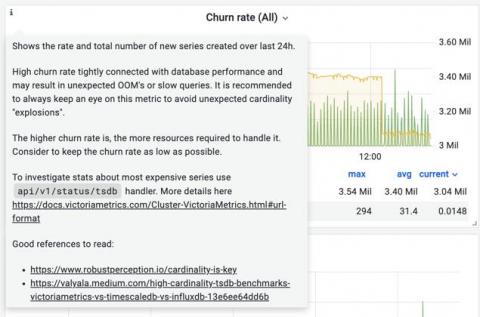
Share: VictoriaMetrics is a monitoring solution. It was designed to collect and process telemetry from many systems, provide a retrospective view, and forecast metrics for capacity planning. But what about monitoring VictoriaMetrics itself? There is one of the software development approaches called Observability Driven Development (ODD). In a nutshell, it means that developers should always keep in mind that software needs to be transparent to the person who uses it. Does your software make backups?

Synthetic Monitoring of Microsoft AVD Service Levels

We recently announced a FREE ready-to-go standalone SaaS logon simulator tool for Microsoft AVD, available here. This joins our fully featured logon simulator available for use on-premises, as SaaS or in the cloud within our synthetic monitoring suite. A logon simulator, whilst a useful tool, should be used in conjunction with other synthetic and real user monitoring tools for a truly proactive IT strategy designed to prevent real users encountering issues and raising support tickets.

What is the Difference Between Stockout and Shortage in Terms of Inventory Management?

Lots of people believe that inventory management can be done easily. Inventory management is not a simple task especially when you have multiple work locations. There are several issues that can occur in inventory management which can be harmful to business. One of the major inventory management issues is stock-out. However, lots of people use stock-out in the place of inventory shortage & vice versa. But both are different terms. What is the difference between them?

Building a more resilient business with the Now Platform Tokyo release

Organizations today—and the people who run them—face unprecedented challenges. Executives are under pressure to make faster, smarter decisions and drive innovation while struggling to maintain day-to-day operations. Leaders are betting on platforms they trust to help them thrive in uncertain times. The Now Platform® Tokyo release is designed to tackle complex, interconnected problems and deliver value across the enterprise. It helps boost efficiency and business resilience.