Operations | Monitoring | ITSM | DevOps | Cloud

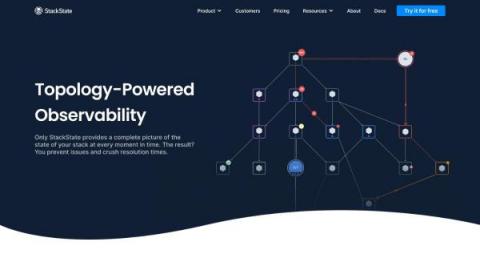
What is Observability: A Beginner's Guide

Observability is a methodology that you incorporate into your enterprise architecture to provide greater visibility into what is happening. It helps us determine the states of the system from their external outputs and allows technicians to identify bottlenecks, predict issues and mitigate them. As the architectures of IT systems are becoming more complex and distributed we use observability to meet the need to measure their internal states.
Share secrets with standalone projects with project context restrictions

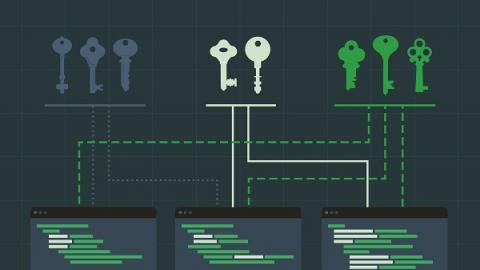
Introducing project context restrictions for GitLab organizations. This feature enables project-based restrictions on contexts for standalone projects that are not tied to a VCS. Standalone projects are available at this time only with a GitLab integration with CircleCI. In this blog post, we hope to explain the value of this feature and how it can be used to further secure your workflows.

Comprehensive Guide on Partitioning and Sharding in Azure Database for PostgreSQL

One of the biggest mistakes I’ve had to repeatedly help companies fix has been poor partitioning design. I’ve seen many database architectures designed in an attempt to make queries faster. While faster queries can be a product of implementing partitioning correctly for a given design, I’ve often seen query response times get much slower from implementing partitioning incorrectly for the database design.

Collect traces, logs, and custom metrics from your Google Cloud Run services with Datadog

Google Cloud Run is a managed platform for the deployment, management, and scaling of workloads using serverless containers. You can deploy workloads in the cloud or, using Cloud Run for Anthos, on your on-prem infrastructure.

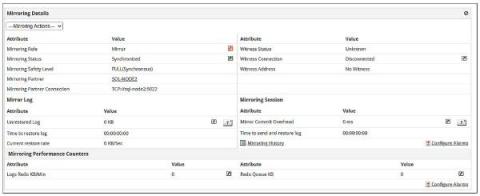
Common SQL Server challenges and how Applications Manager's SQL Performance Monitor helps you overcome them

Database management systems are an essential component of business applications. Over the years, MS SQL has earned its place in the hearts of database administrators (DBAs) as the most trusted relational database management system. It is still the go-to choice for many DBAs as it helps them leverage its extensive capabilities across various dimensions such as security, portability, transaction processing and analytics.

Why you should ditch your overly detailed incident response plan

When critical incidents happen — which they inevitably do 😅 — and you’re in the middle of trying to figure out what the best thing to do is, it can feel comforting to know that you’ve got a pre-prepared list of instructions to follow, commonly known as an “incident response plan”: In theory this sounds quite simple, and a typical flow you might envision is: It might be tempting to think that the hardest part of running incidents is finding or writing a checkl

How to Detect Anomalies and Why You Should Care

Companies today are relying on technology more than ever thanks to widespread digital transformation and cloud initiatives. And this is increasing the need for safe, efficient and reliable IT environments. But maintaining operational IT stability is very difficult when considering the complex and dynamic nature of today’s IT environments. In fact, IT environments are constantly changing, with new network devices, users and software versions coming into existence.

SAP S/4HANA Private Cloud vs. Public Cloud: Which Is Right for You?

The SAP private cloud has been around for a while and was designed to provide secure, reliable, and scalable computing services to smaller organizations. Choosing the right platform upon which to lay the foundation of your entire business's operations is no small task. This article should help you reach a clearer decision by explaining: To learn how Avantra can help your company succeed, give it a try today, for free.