Operations | Monitoring | ITSM | DevOps | Cloud

How to Simplify Asset Audits with the help of the Asset Auditing Mobile Application?

Asset auditing is usually a long procedure especially when an organization has lots of assets. It becomes more hectic when you know some assets such as vehicles are in different locations and some vehicles are out making deliveries to clients. That is why it is important to plan asset audits in a way so that you have assets available at the time of audit. However, it is not simple as it seems that is why auditing is a complicated procedure!

The Power Of Combining Kubernetes And Non-Kubernetes Cloud Spend

Whether you’re new to Kubernetes or a bona fide wizard, it may seem like getting any meaningful cost data out of it is a miracle. This is because many organizations that migrate to Kubernetes unwittingly step into the Black Box of Kubernetes Spend. In pre-Kubernetes life, teams could allocate costs by tagging resources.

iLert is now a verified integration with HCP Consul

More than 16 months ago we provided a solution to integrate HashiCorp Consul with our alerting and on-call management platform by using consul-alerts - a dedicated application that allows for communication between a deployed Consul instance and an existing iLert account. ‍ With more code infrastructure being moved to the cloud to ensure better security and availability, we too have ensured that our service integrates with the HashiCorp Cloud Platform (HCP).

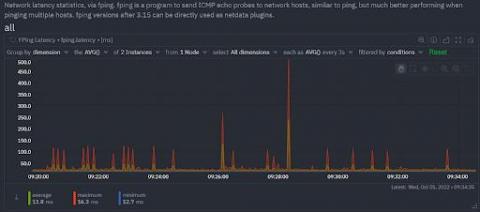
How to monitor host reachability

Most sysadmins and developers have at some point used a few of the popular Linux networking commands or their Windows equivalents to answer the common questions of host reachability- that is, whether a host or service is reachable and how fast it responds. One of the simplest, common checks, is to simply ping a host to verify that it’s reachable from where you issue the command, and to see the total time it takes for the host to receive your request.

How to add a store locator to your ecommerce storefront with Elastic

One thing that adds value to a business’s ecommerce presence is the ability for customers to easily find physical stores with an interactive map. Store locators can be built quite rapidly — all you need to place them on a map is geographic location in latitude and longitude. In this post, I’ll outline the pieces needed to put together a proof-of-concept store locator that could later be added to an ecommerce website.

To Thrive in the Everywhere Workplace, IT and Security Teams Need to Work Together

It’s Cybersecurity Awareness Month. For a CIO, this is like the holidays, and there’s lots to celebrate and lots to do. By reading this, you’re helping me check something off my list: I want everyone in the IT and security landscape to know how these two teams can work together for a more efficient, productive and secure enterprise. To those outside the departments, IT and security teams are often conflated.

Optimize Your Infrastructure Resources for Continuity of Network Monitoring Operations

Leverage DX NetOps network monitoring software metric projections to manage demands for IT resources proactively and cost-effectively. Capacity is a finite resource, so your IT Team needs to carefully analyze current and future use case scenarios to prevent potential bottlenecks. Presenting key network metric projections in a simple and unified manner is paramount to predict capacity and to understand when more resources are needed, allowing you to plan accordingly.

Anodot Named Momentum Leader on G2's Fall Grid

We are proud to announce that Anodot has been named Momentum Leader on G2’s fall grid for Cloud Cost Management Software. G2 is the largest and most trusted software marketplace. More than 60 million people annually use G2 to make smarter software decisions based on authentic peer reviews. G2 is disrupting the traditional analyst model and building trust by showcasing the authentic voice of millions of software buyers.

Effective Log Management and Analysis as an Enabler for Observability

Traditionally, when monitoring or troubleshooting active incidents, engineers access logs directly on the source system. However, modern IT environments are now too complex, and engineers can no longer manage and analyze logs effectively this way. With the adoption of microservices and the use of cloud-native infrastructure, it’s no longer feasible.

Why Understanding and Reducing Technical Debt Matters

Technical debt is a term that comes up frequently in IT organizations—whether to characterize software development, tech stack, or infrastructure. For instance, does your organization have operating systems that you keep around because they have legacy code or support an application critical to your operations, but whose vendor is long out of business? Maintaining legacy systems can be considered a form of technical debt.