How do you know that your open source project has been enthusiastically adopted by the community? A) Engineers give you a raucous standing ovation when a feature is revealed. B) People form a long line to meet you at an industry event. C) Every time there is a release, social media notifications blow up your phone. If you’re Grafana founder Torkel Ödegaard, the answer is D) all of the above.
If you're on a data team, have you ever considered using an incident management tool to respond to pipeline issues? If the answer is no, then you might want to check out this episode. Here, we chat with Jack, Data Analyst at incident.io, to better understand why data teams can—and should—look to incident management tools like incident.io to manage issues. We chat about: Read Jack's blog post about incident management for data teams.
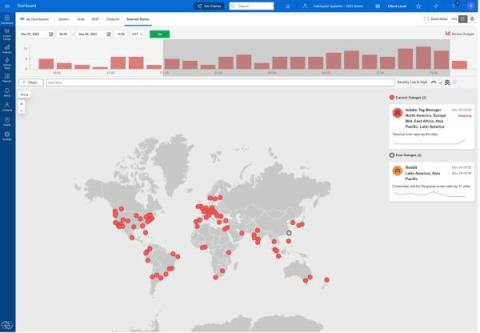
On December 8, 2023, Adobe's extensive customer base was impacted by a series of outages in the Adobe Experience Cloud, starting from 8:00 AM EST and continuing until 1:45 AM EST on December 9. We haven't seen a third-party outage of this magnitude since the DoubleClick outage of 2018.
This blog post aims to dissect the various deployment options available for Rails applications in 2024, emphasizing the choice between native and containerized approaches. It dives into the advantages and drawbacks of each method and explores the hosting options available for each. Let’s dive right in!
You should read this if you are an executive (CIO/CISO/CxO) or IT professional seeking to understand various Kubernetes business use cases. You’ll address topics like: Many enterprises adopting a multi-cloud strategy and breaking up their monolithic code realize that container management platforms like Kubernetes are the first step to building scalable modern applications.