Operations | Monitoring | ITSM | DevOps | Cloud

The Five Tenets of Observability

A new year is a chance to have a new start, and one thing that it’s a great opportunity to think about is the monitoring and observability platform you’re using for your applications. If you’ve been using a legacy monitoring system, you’ve probably heard about observability all over the ‘net and want to figure out if this is really something you need to care about.

Go from reactive to proactive IT operations with AI

On your journey from reactive to proactive IT operations, you may be unsure where to start. If your organization is lacking visibility into your operations, that’s the best place to begin. Automation and artificial intelligence (AI) can help you gain that needed visibility. AIOps and visibility Artificial intelligence for IT operations (AIOps) offers numerous benefits, including faster response time, improved IT health, and simpler IT management.

Preventing Network Configuration Drift

A cynical network engineer might say, “configuration drift happens when you take the day off.” Someone changed something they shouldn’t have, and didn’t tell anyone. As a result, the network gets just a little less secure, and a little harder to troubleshoot. And then it happens again. And again. And over time, all those little changes that people thought would never mean anything suddenly add up to a network looking a lot different from what it’s supposed to be.

Does Your MSP Have a Single Point of Failure?

When I’m speaking to any IT solution provider or managed service provider (MSP), one of the most common questions I’m asked is, “What’s the one mistake you’d recommend any IT businesses avoid?” My answer is always this: Not documenting your business. The reason is simple. If you don’t document your business, you’ll inevitably find your business is prone to an SPF—a single point of failure.

Make the most of your observability data with the Data Volume app

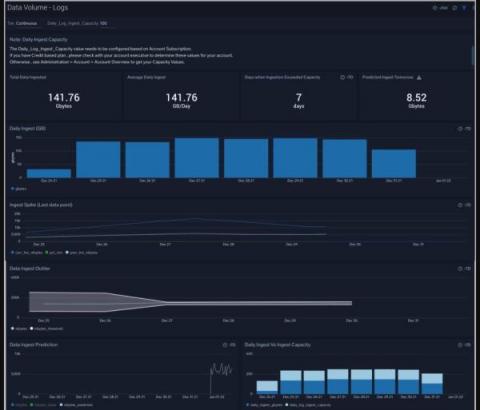
As a DevOps, SecOps, or IT operations manager, you're surrounded by all the technology for the systems running the entire organization. This means legacy infrastructure, multi-cloud environments, services, tools, and applications. All of these components generate data—a huge amount of data—some of which you need to leverage for full-stack observability to ensure those systems supporting the business are running efficiently.

Algist Bruggeman Uses Insights from InfluxDB to Optimize Industrial Processes and Production

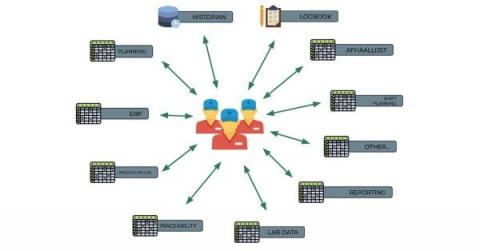
Founded in 1884 and located in Ghent, Belgium, Algist Bruggeman supplies fresh, liquid, and dried yeast to industrial, semi-artisanal, and artisanal bakeries, as well as to the beer, wine, and pharma industries. Algist Bruggeman is part of the Lesaffre Group, a key global player in fermentation for more than a century. Even with more than a century of industrial production behind it, Algist Bruggeman continues to evolve its manufacturing processes.

Data Center Skills in High Demand in 2022

As modern data centers grow increasingly complex and distributed, data center technology and infrastructure can become more difficult to manage, and it becomes harder for IT decision-makers to find qualified candidates. According to Uptime Institute, 50% of data center owners and operators are struggling to find qualified candidates. In recent years, the COVID-19 pandemic has accelerated industry trends such as remote data center management, deepening the already severe data center skills gap.

Episode 2: Mooving to Remix: Code You Will be Happy With

Episode 2 of Mooving to… dives into a new tool called Remix, a framework to help create front-end code, you’ll love. This episode focuses on a new web framework that helps streamline your processes and eliminate downtime to the best of your ability. Thom Duran and Andrew Leonard of Moogsoft are joined by Kent C. Dodds, Director of Developer Experience at Remix.

Designing production-ready AWS serverless applications

Serverless has become an increasingly popular paradigm among organizations looking to modernize their applications as it allows them to increase agility while reducing their operational overhead and costs. But the highly distributed nature of serverless architectures requires developers to rethink their approach to application design and development. AWS-based serverless applications hinge on AWS Lambda functions, which are stateless and ephemeral by design.