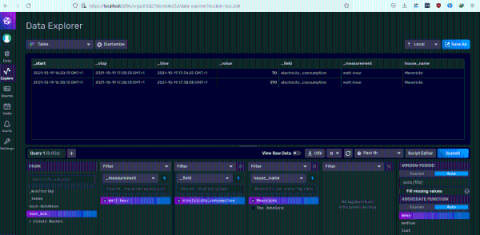
Ever wonder how your teammates go about debugging? When you use Honeycomb, you’re not only getting observability into your systems; it also provides observability into how your teammates use Honeycomb! Very meta, no? You’re never alone when writing or running Honeycomb queries. Opening up the right sidebar will show you the queries your teammates have recently run on the same dataset.
To date, AIOps has been a solution first and foremost for IT operations teams. In other words, AIOps has been used primarily to help IT teams manage what happens in the post-deployment part of a CI/CD pipeline, when they need to detect and remediate issues in production environments. That doesn’t mean, however, that AIOps leaves developers out of the picture. Although the conversation surrounding AIOps hasn’t paid a lot of heed to developers so far, it’s perhaps time to change that.
Are you looking for an open source cloud platform and you don’t know where to start? Are you getting lost in all the independent rankings and cloud platform comparison pages? Try OpenStack and get your open source cloud platform up and running today. OpenStack works at any scale: from a single workstation to thousands of nodes and installs in minutes. Sounds impossible? Give it a try or continue reading to explore where is it coming from.
Linux server management is an integration of cybersecurity and business objectives. Linux server management at scale is a vastly different activity from interacting with a terminal on one machine. The best Linux server management tools universally offer a server management GUI within a web browser. Implementation details matter, especially in a pay-for-compute world. Sysadmin tools that don’t have a lightweight footprint increase overall compute costs.
You just launched your application and it’s attracted more users than you were expecting. Your web server is bombarded with data. Now you need to know more about your users: what is the dominant device they’re using, and how long are they staying on the app? A time series database will help you answer these questions. It allows you to save data for a given point over a specified period of time, which gives you insight into what type of usage you’re getting and when.
Multi-Factor Authentication (MFA) provides an enhanced security mechanism for your entire organization by requiring multiple methods of authentication credentials. Using traditionally managed passwords for accessing your apps, services, and networks is no longer a secure methodology. Indeed, cyber threats are on the rise. Hackers today employ sophisticated techniques such as spear-phishing or pharming to gain unauthorized access to corporate accounts.
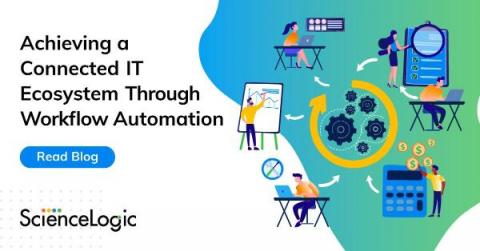
This blog outlines how the ScienceLogic SL1 platform kick starts your automation journey with automated workflows - your next step toward AIOps.
I hate to say this, but #Omicron is at the doorstep. According to the CDC website, there have been over 60M cases in the US so far. As a result, companies like Google and Apple are delaying returning to the office while some call the return date as now 'history'. Although we cannot predict the nature of the virus, we have some best practices to help our customers and IT manage their employee experience in a hybrid distributed environment.