Operations | Monitoring | ITSM | DevOps | Cloud

3 Simple Ways to Augment Microsoft Call Quality Dashboard Data

The Microsoft Call Quality Dashboard (CQD) does a solid job of helping admins check call and meeting quality across their Teams setup. But wouldn’t it be handy if you could get more out of CQD and make optimizing Teams for your business easier? Here are 3 ways to do just that. Although Microsoft provides the core quality data for you to accurately monitor Teams performance, there are other things you can do to augment your call quality dashboard.
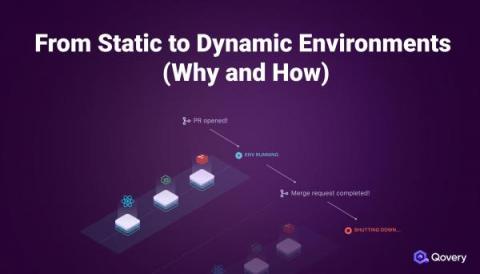

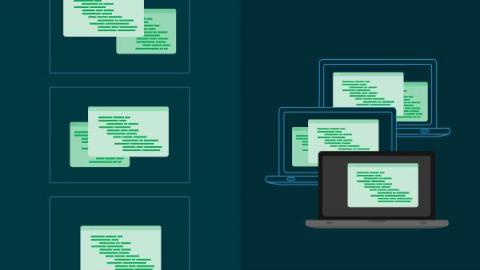
From Static to Dynamic Environments (Why and How)

We have seen a rapid increase in the development pace of product development in the last few years. As a company, you never stop improving your processes. Successful organizations find different ways to optimize the release process to accelerate their product development cycles. Growing companies, especially those with complex products with many integrations, often struggle to keep pace with the growing complexity of processes.

What is confidential computing? A high-level explanation for CISOs

Privacy enhancing technologies and confidential computing are two of my favorite topics to talk about! So much so that I am writing this blog post on a sunny Saturday afternoon. But wait, what’s that I hear you murmuring? “What is confidential computing? And how does it affect me?” Those are two very good questions.

Containers vs virtual machines: what is the difference?

In computing, virtualization is the creation of a virtual — as opposed to a physical — version of computer hardware platforms, storage devices, and network resources. Virtualization creates virtual resources from physical resources, like hard drives, central processing units (CPUs), and graphic processing units (GPUs). By virtualizing resources, you can combine a network of resources into what appears to users as one object.

MSP automation-getting started and overcoming challenges

Over the past few Boot Camps I’ve done since becoming a Head Nerd, automation has been a continuing topic of discussion, and one that brings up various roadblocks. Many of the MSPs that I have talked to one-to-one after the Boot Camps have said they were “embarrassed” to ask more questions about automating their service delivery as they didn’t want their peers “laughing” at them. If you fall into this category, don’t panic!

How to Keep Your System Visible in the Age of Remote Working

Monitoring IT infrastructure and services has always been an essential IT prerequisite. However, your IT monitoring system and security measures need to upgrade with an exponential increase in the number of remote users post-pandemic. For instance, consider this: At the end of a work day, you are notified that one of your critical services has gone down. But the problem is that five teams support different processes of that service.

Setting better SLOs using Google's Golden Signals

To many engineers, the idea that you can accurately and comprehensively track your application's user experience using just a few simple metrics might sound far-fetched. Believe it or not, there are four metrics that aim to do just that. They're called the four Golden Signals and should be a core part of your observability and reliability practices.

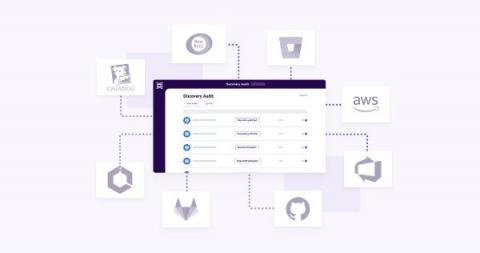
Building confidence with Cortex Discovery Audit

A microservices catalog is only useful if you are confident that anything stored in it is fully accurate and that the information will not become outdated. How can you be certain that your catalog stays up-to-date in the future? Should you look for an asset in the catalog and, despite finding it there, also double-check GitHub? The service catalog is supposed to be your single source of truth. The purpose is defeated if you have to look for what you need in multiple different places.
Sponsored Post

Production Data Simulation: Record in One Environment, Replay in Another

Have you ever experienced the problem where your code is broken in production, but everything runs correctly in your dev environment? This can be really challenging because you have limited information once something is in production, and you can't easily make changes and try different code. Speedscale production data simulation lets you securely capture the production application traffic, normalize the data, and replay it directly in your dev environment. There are a lot of challenges with trying to replicate the production environment in non-prod.

How we do realtime response with incident.io, Sentry & PagerDuty

Like most tech companies, we use an on-call rota and various alerting tools. We do this to respond to incidents before they’re reported. Proactively identifying issues and communicating to customers helps us provide great experiences and fosters trust. Internally, we’ve been using these alerting tools in tandem with our auto-create incidents feature. We’ve found that it’s made responding to the pager much smoother - it’s one less thing to do when you get paged at 2am.