Operations | Monitoring | ITSM | DevOps | Cloud

4 Tools & Strategies You Can Use to Boost Your Work-From-Home Business

Working from home has changed the business landscape, giving many professionals the option to take their tasks outside of the office and allowing them more control over their workdays and home life. Although many benefits can be gained from work-from-home setups, stress is not avoidable. Forbes highlights that common problems plaguing remote workers include distractions, communication and technical complications, and work-life unbalance.

Microsoft's Cross-Platform Agent for System Center Operations Manager to Support Ubuntu 22 and RHEL 9

Since the release of OpenSSL 3 and the adoption of the technology in recent Linux kernels, a growing demand for support in System Center Operations Manager and its cross-platform agents has emerged. Together with our clients, we have been waiting and hoping for a newer release to help them monitor these newer distributions in SCOM. And now it finally looks like the wait is over.

Understanding Remote Access Protocols

“Remote access makes everyone’s jobs easier,” MSP360 states. Thanks to remote access, organizations and their departments are able to collaborate and perform even with fully remote or hybrid workforces. In order for remote access to work properly, organizations connect their remote servers to endpoints using remote access protocols. Let’s dive into remote access protocols and find out how they are used in today’s tech environments.

Kubecost and Qovery Team up to Offer Cost Monitoring for DevOps Teams

We are thrilled to announce our partnership with Kubecost, a game-changing provider of cost monitoring for Kubernetes clusters. This collaboration marks a new era in efficiency and cost-effectiveness for DevOps teams everywhere. With Kubecost's advanced monitoring capabilities integrated into our own Kubernetes deployment platform, we are empowering organizations to take control of their cloud-native infrastructure like never before.

4 Unique Time Series Workloads for InfluxDB, Powered by IOx

Data is kind of like Newton’s first law of motion. Data is just that unless acted upon by something else. Time series data, therefore, is something you derive from data. We generally derive time series data to record historical observations about a physical or virtual system (for example, think of sensors and servers, respectively). However, not all time series data is the same. There are different use cases for time series data, and each has its own workload needs.

Differences Between Block Blobs, Append Blobs, and Page Blobs

Azure Blob Storage is a cloud-based storage solution that enables developers to store and manage large amounts of unstructured data. Blob storage can store any type of text or binary data, such as documents, images, audio, and video files. Blobs are divided into three types: block blobs, append blobs, and page blobs. Each type of blob has its unique characteristics and is used for different purposes.

Understanding Distributed Tracing with a Message Bus

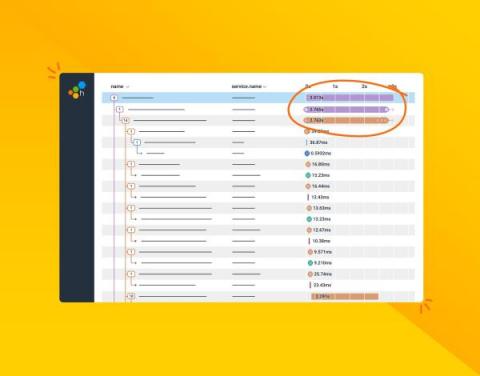
So you're used to debugging systems using a distributed trace, but your system is about to introduce a message queue—and that will work the same… right? Unfortunately, in a lot of implementations, this isn't the case. In this post, we'll talk about trace propagation (manual and OpenTelemetry), W3C tracing, and also where a trace might start and finish.

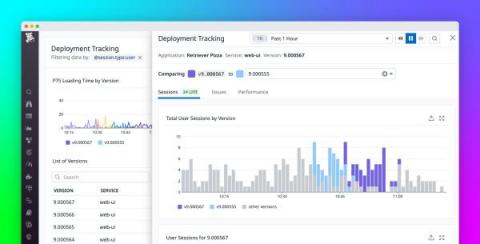
Troubleshoot faulty frontend deployments with Deployment Tracking in RUM

Many developers and product teams are iterating faster and deploying more frequently to meet user expectations for responsive and optimized apps. These constant deployments—which can number in the dozens or even hundreds per day for larger organizations—are essential for keeping your customer base engaged and delighted. However, they also make it harder to pinpoint the exact deployment that led to a rise in errors, a new error, or a performance regression in your app.