Operations | Monitoring | ITSM | DevOps | Cloud

Raygun4Net update: Portable PDBs and offline storage

We’re excited to roll out support for Portable PDBs and offline error storage in Raygun4Net 11.0.0. In this article, we’ll break down these features and how they can enhance your error identification and debugging process. Ever seen an error in Raygun but missing the file and line number in the stack trace? This happens when debug symbols aren’t available at runtime. With Portable PDB support, this issue is resolved.


Utilizing AIOps to Streamline Mobile App Performance and Monitoring

In today's fast-paced digital environment, mobile app performance and monitoring are critical. Leveraging AIOps (Artificial Intelligence for IT Operations) can significantly enhance these aspects. Discover how AIOps can revolutionize your mobile app management.

Guide to Monitoring Webhook Performance Using Telegraf

Monitoring webhook performance is crucial to ensure reliable and efficient communication between your software/application and external services, as delays or failures in webhook processing can lead to significant data loss or service disruptions. Additionally, performance monitoring helps identify bottlenecks and optimize the system, ensuring a smooth and responsive user experience.

How to hack your Google Lighthouse scores in 2024

Google Lighthouse has been one of the most effective ways to gamify and promote web page performance among developers. Using Lighthouse, we can assess web pages based on overall performance, accessibility, SEO, and what Google considers “best practices”, all with the click of a button. We might use these tests to evaluate out-of-the-box performance for front-end frameworks or to celebrate performance improvements gained by some diligent refactoring.

The Importance of a Cloud Exit Strategy: What It Is, Who Needs It, and How to Plan It

Do you need a “Cloud Exit Strategy”?. In recent years, cloud services have become an integral part of the digital infrastructure for businesses of all sizes. Organizations are increasingly leveraging cloud computing to enhance their operations.

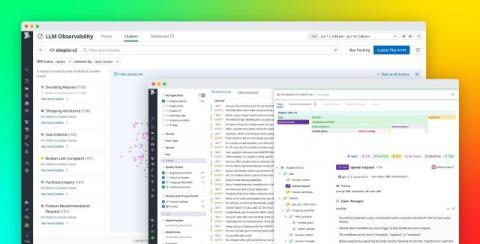
Monitor, troubleshoot, improve, and secure your LLM applications with Datadog LLM Observability

Organizations across all industries are racing to adopt LLMs and integrate generative AI into their offerings. LLMs have been demonstrably useful for intelligent assistants, AIOps, and natural language query interfaces, among many other use cases. However, running them in production and at an enterprise scale presents many challenges.

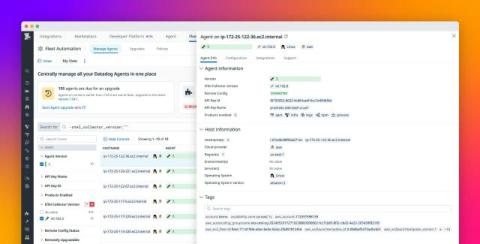
Unify your OpenTelemetry and Datadog experience with the embedded OTel Collector in the Agent

OpenTelemetry (OTel) is an open source, vendor-neutral observability solution that consists of a suite of components—including APIs, SDKs, and the OTel Collector—that allow teams to monitor their applications and services in a standardized format. OTel defines this data via the OpenTelemetry Protocol (OTLP), a standard for the encoding and transfer of telemetry data that organizations can use to collect, process, and export telemetry and route it to observability backends, such as Datadog.

DASH 2024: Guide to Datadog's newest announcements

At this year’s DASH, we announced new products and features that enable your team to observe your environment, secure your infrastructure and workloads, and act to remediate problems before they affect customers. LLM Observability, which enables you to get deep visibility into your generative AI applications, is now generally available. The Datadog Agent now includes an embedded OTel Collector to provide native support for OpenTelemetry.