Operations | Monitoring | ITSM | DevOps | Cloud

AWS Step Functions - A User's Guide

Many articles have been written about AWS Step Functions since it was first introduced in 2016. Most of them create the impression that the service is simply an extension of the Lambda function that allows us to stitch together multiple Lambda functions to call each other. But actually, it is much more than that. Step Functions allows us to design and build the flow of execution of modules in our application in a simplified manner.

Serverless Microservice Patterns Used In AWS

With serverless computing, our daily tasks and routines are much more comfortable than they used to be before. Serverless allows us to put our focus on the code itself without the need to worry about the configuration of the underlying compute resources or maintenance. Numerous cloud providers (AWS included) gives us a variety of previously managed services which we can combine and create a massively scalable and incredibly robust serverless microservices.

How to Monitor NGINX Logs with Sumo Logic

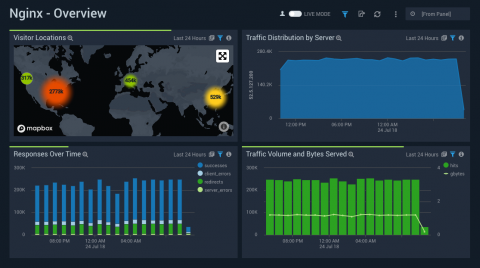
If you’re just joining us, I highly advise you to go back and check out our first two parts of this three part series regarding NGINX and Sumo Logic where we go over a basic Introduction to NGNIX and also Touch Up On NGINX, Logs, and Why Logs Are Important. If you’ve been following along, then great, let’s jump right into it.

Monitor your customer data infrastructure with Segment and Datadog

This is a guest post by Noah Zoschke, Engineering Manager at Segment. Segment is the customer data infrastructure that makes it easy for companies to clean, collect, and control their first-party customer data. At Segment, our ultimate goal is to collect data from Sources (e.g., a website or mobile app) and route it to one or more Destinations (e.g., Google Analytics and AWS Redshift) as quickly and reliably as possible.

Monitor Apache Hive with Datadog

Apache Hive is an open source interface that allows users to query and analyze distributed datasets using SQL commands. Hive compiles SQL commands into an execution plan, which it then runs against your Hadoop deployment. You can customize Hive by using a number of pluggable components (e.g., HDFS and HBase for storage, Spark and MapReduce for execution). With our new integration, you can monitor Hive metrics and logs in context with the rest of your big data infrastructure.

Monitor TLS/SSL: Certificates, Ciphers, Expiration and Spoofing

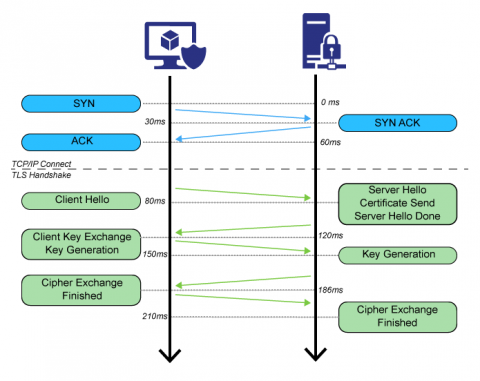
Exoprise recently released two new CloudReady sensors for monitoring Transport Layer Security (TLS), aka Secure Sockets Layer (SSL), connections end-to-end. TLS/SSL is the foundation for just about every web request and transaction across the Internet today. Arguably, SSL is as important as TCP/IP itself to the formation of our modern-day Internet, SaaS and Cloud world.

Solving complex performance problems in .NET Core [Webinar]

“It’s very much clear that .NET Core is the way going forward. Certainly new features and very much performance rated features seem to be only going in one direction. So, there’s this added incentive to move over.” - Matt Warren, performance expert at Raygun. Today, our host Andre talks to Matt Warren, .NET (C#) Developer at Raygun and Microsoft MVP.

Kamon Just Got a Lot Easier to Use, Welcome Kamon 2.0!

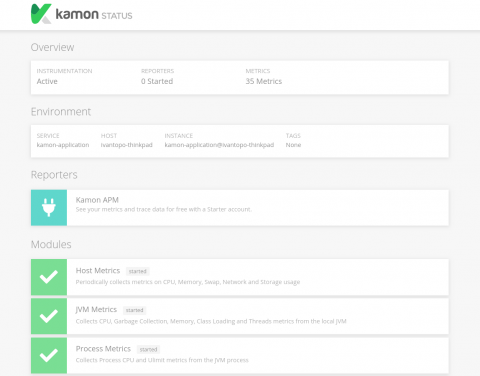
Dear community, Kamon 2.0 is out and ready to roll! For this release we focused primarily on simplifying the installation proces and making sure that the core APIs are more solid and user friendly, since they will be the foundations upon which we will instrument the whole JVM world in the months to come!

An Introduction to Python 3.7 Data Classes

Sometimes it’s fun to just nerd out for a moment. Python is one of the most popular scripting languages today and we love it too. That’s one reason why LogicMonitor can execute any script or programming language supported by your environment. That means can enjoy the latest features of your favorite languages in your favorite monitoring tool (right?). If Python is your vice, give Python 3.7’s Data Classes a try!

New features for Ruby and Rails applications with a new version of the Honeycomb Beeline for Ruby

We are excited to announce a new version of the Honeycomb Beeline for Ruby! This new version solidifies our Ruby support, providing out-of-the-box automatic instrumentation for additional frameworks and enhanced support for our currently supported frameworks. The goods: For Rails applications we now have a generator that creates a configuration file for the Beeline. This generates a configuration file in config/initializers/honeycomb.rb with the Beeline pre-configured for your Rails application: