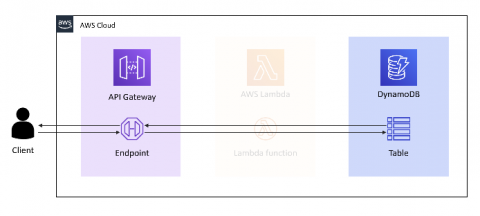
The most common integration type for AWS API Gateway is with Lambda functions. The API service can integrate with virtually any other service that accepts HTTP requests, though. This opens up possibilities to use the API Gateway as a proxy to database queries, without any compute layer such as a Lambda function. The direct integration between API and database is perfect when Lambda serves only as an intermediator.
Cost-efficiency is one of the main pillars of the Serverless Well-Architected framework. Read-intensive applications can save money and improve efficiency by using cache systems. AWS Lambda’s internal memory could be used as a caching mechanism. A Lambda container remains alive after an invocation is served, even if it stays idle for some time. Whatever was loaded in the container’s memory will remain there for the next invocations.
While creating a Docker image, one of the most important decisions to make is what base image to use. In this post I’ll compare three kinds of base images for you.
Every web developer wants to build a website that adheres to the almost mythical “best practices” so that it is light and performant. But how exactly are developers supposed to measure performance? And what is considered to be a best practice when it comes to developing for the web?
Since the beginning of the Cortex project, there was a flaw with the ingester service responsible for storing the incoming series data in memory for a while before writing it to a long-term storage backend. If any ingester happened to crash, it would lose all the data that it was holding.
Vulnerability Manager Plus is ManageEngine’s enterprise security program that empowers system administrators with an essential set of tools for managing and mitigating threats and vulnerabilities across systems in IT infrastructure. This security solution features specialized tools that help enterprises improve their overall security posture. Some of its unique tools include its integrated patch management module, security configuration management, and prioritization of vulnerabilities.
Monitoring every resource in your VMware environment is crucial to avoid sudden issues and ensure proper capacity planning. Although VMware offers its own monitoring suite, organizations frequently seek out third-party monitoring tools. The start of this trend dates back to the early days of vSphere, and it has only continued to increase. This is because third-party tools provide monitoring for the compute, storage, network, and analytics aspects of VMware environments, all from a single interface.
This is an unprecedented time for each one of us. Every organization wishes to continue providing value to their customers despite the current situation. We’re all ready to go that extra mile to achieve whatever is possible in this digital age. Organizations around the world are fully committed in maintaining their business operations at optimum levels. There are certain tools or software that can assist you in this process.
The current sudden and forced work-from-home (WFH) situation has caught many organizations unawares. In fact, many are unprepared or underprepared when it comes to arming themselves with the right tools for a remote work model, leading to an increase in network vulnerability as users access data remotely. Employee productivity has also become a major concern among employers. Taking all of this into account, ManageEngine has decided to make AD360 free for organizations around the world.