Operations | Monitoring | ITSM | DevOps | Cloud

What Does 99.9% Uptime Mean?

An old adage about choosing a hosting provider says that everyone promises 99.9% uptime so you need to test uptime of a site for the real picture. Or scour the forums for reviews and judge for yourself how reliable they are. That works too. What that saying is really getting at is the need for some kind of indicator that uptime does not fall below expectations, because you can’t just trust the word of the provider when your business is at stake.

Introducing Organization Accounts

Several times throughout the last five years of StatusGator, we have received requests for organizational accounts. As more and larger teams have joined, there’s been a steady increase in requests for multi-user accounts. We are proud to announce that StatusGator Organization accounts are now available on our Start Up plan and above. Our first implementation of this is quite simple: separate user accounts are joined together by linking them to a parent Organization record.

MongoDB (and Atlas) vs DynamoDB - 8 Basic Comparisons

Both DynamoDB and MongoDB are NoSQL databases, but the similarities probably end there. In this article, we cover their strengths and weaknesses in 8 basic categories, so that you can decide which one suits best your needs. While the data model behind Mongo is more flexible for storage and retrieval, Dynamo is stronger in terms of scalability, consistent performance under heavy load, and infrastructure abstraction.

5 Reasons You Should Start Analyzing Your Logs

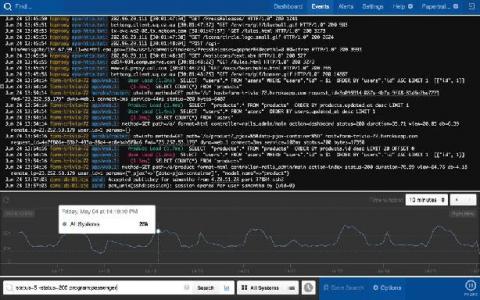
In IT environments, all software applications and systems produce logs with varying levels of details or context about different events. These log files are automatically generated, and you can see them as a time-stamped record of events. Traditionally, organizations maintained logs locally or in a self-hosted setup. This was done primarily to meet various compliance mandates.

WFH tips: Slack hacks that will make you more productive

The COVID-19 pandemic has forced many companies to require employees to work from home. It’s a new normal for many, but at Grafana Labs our team has always recruited and operated with a remote-first culture in mind. To help everyone transition to a home office environment, we launched a new WFH series in which Grafana team members have been sharing their best advice for staying productive at home – yes, even if you have kids around.

Cyber-hygiene 101 during remote working: Protecting your digital identities with multi-factor authentication

When organizations shift to a work-from-home environment, identity and access management (IAM) takes center stage. Organizations with remote workforces must fortify their IAM policies and tools for a better user experience to ensure productivity, while also handling all the security challenges remote work presents to ensure data and system security. One of the biggest risks an organization faces when its workforce goes remote is unnecessary and unauthorized access to organizational data.

Key metrics for PostgreSQL performance monitoring

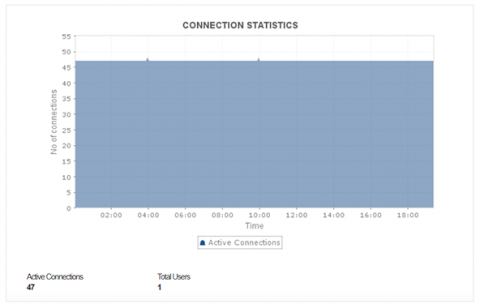
PostgreSQL offers flexibility on how data is stored and compared in a relational database. This is why it’s so popular among enterprises as a solution for their database requirements. Although PostgreSQL is quite reliable, database problems are inevitable, especially in large-scale environments. Ignoring these problems could result in a plunge in the productivity of your business.

NiCE zLinux Management Pack 1.10 for SCOM

To deploy and run Linux on System z, virtualization, multi-layer virtualization using LPARs and z/VM is required . z/VM is used as the second layer virtualization within in LPARs to allow hundreds or thousands of virtual machines within a single physical system. The NiCE zLinux Management Pack for SCOM provides monitoring of Linux distributions on the IBM System z platform using Microsoft System Center.