We’re excited to share that the official Elastic Cloud Terraform provider is now available in beta. Operations and SRE teams often rely on Terraform to safely manage production-related infrastructure using methodologies such as infrastructure as code, which allows you to apply peer-reviewed infrastructure changes in an automated and controlled fashion. The provider works with Elasticsearch Service on Elastic Cloud, Elastic Cloud Enterprise, and Elasticsearch Service Private environments.
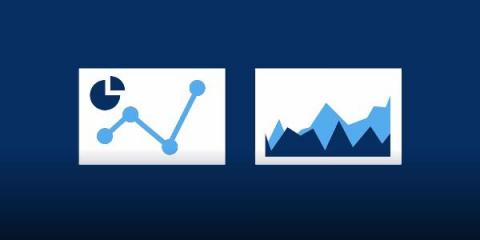
Having good observability is vital to the health of your cloud infrastructure and applications, and a key element to using that information effectively is being able to create dashboards with relevant metrics. Today we are announcing a new dashboard creation experience from Cloud Monitoring that allows you to generate a greater variety of visualization types, introduces better flexibility for dashboard layouts, and makes data manipulation easier so you can create dashboards that better fit your needs.
Flowmon Anomaly Detection System from Kemp now contains Indicators of Compromise (IoC) for the SUNBURST trojan specifically. Users of the Flowmon network detection and response (NDR) tool can check if they are under attack and set up measures to detect SUNBURST. This December, the world shook at the news of several US government bodies falling victim to a highly sophisticated attack.
Netdata is architected on every level, across both the open-source Netdata Agent and Netdata Cloud, to help you own every layer of your monitoring experience. With this design, all metrics data collected by the Netdata Agent stays distributed on your node, but you also leverage Netdata Cloud’s dashboards and multi-node visualizations to view the health and performance of an entire infrastructure from a single application.
Microsoft’s Internet Information Services (IIS) is a well-known web server that hosts web applications and is used in many sectors like banking, healthcare, logistics, E-commerce, etc. It is the backbone of many IT Infrastructures but if it encounters issues it can cause websites to experience higher response times. Hence, end-users often leave the website. A web server plays a vital role in an organization’s IT infrastructure.
Slow is the new downtime. What you once feared from a downed website — decreased conversion rates, lower page ranks, abandoned carts — now applies to a slow-loading experience. Problem is, slow is more nuanced than downtime; that is, while downtime is binary — the site’s either up or it isn’t — slow is in the eye of its beholder. It’s why asking what makes a slow website gets the same shrug from a developer as asking them how long an afternoon is.
LogicMonitor recently released LM Container Argus v4 and has made monitoring Kubernetes clusters even easier. We have updated our Add Kubernetes Cluster wizard to make customization easier in the installation process. Start by going through the normal configuration settings, and then you will have the option to edit additional configuration settings to the CollectorSet Controller and Argus YAML files.