Operations | Monitoring | ITSM | DevOps | Cloud

Unravel the hidden mysteries of your cluster with the new Kubernetes Dashboards

One of the greatest challenges you may face when creating Kubernetes dashboards is getting the full picture of your cluster. Kubernetes is the de-facto standard for container orchestration, but it also has a very steep learning curve. We, at Sysdig, use Kubernetes ourselves, and also help hundreds of customers dealing with their clusters every day. We are happy to share all that expertise with you in the Kubernetes Dashboards.


New Features: Heroku Errors and a Magic Dashboard

We have been collecting Logplex data for our Heroku customers for a while now. With that data we create Magic Dashboards for Postgres and Redis integrations, and track Heroku Host Metrics. Starting today, we also extract error incidents from Heroku Logplex data and provide you with a magic dashboard for Heroku status codes.

SLA Compliance: The Service Desk & ITSM Metric Explained

IT solutions are either utilized as a service or procured from third-party vendors by organizations of all types and sizes. This enables organizations to gain access to reliable IT technologies without having to internally build, operate, or manage the underlying systems. As a result of this, both the organization and the solutions provider sign a service-level agreement (SLA), which commits the vendor to deliver services that meet the established performance requirements.

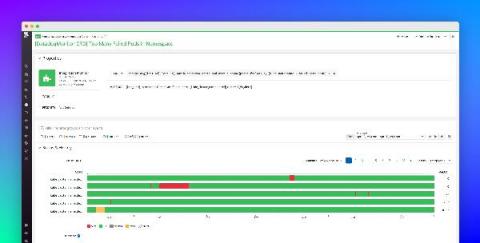
Automatically create and manage Kubernetes alerts with Datadog

Kubernetes enables teams to deploy and manage their own services, but this can lead to gaps in visibility as different teams create systems with varying configurations and resources. Without an established method for provisioning infrastructure, keeping track of these services becomes more challenging. Implementing infrastructure as code solves this problem by optimizing the process for provisioning and updating production-ready resources.

Sponsored Post

A guide to single-page application performance

Single-page applications (SPAs) present a unique approach to building web applications. They help to increase development velocity and can present big performance wins when it comes to delivering a fast and seamless user experience. Monitoring SPAs for performance still comes with a unique set of challenges, like choosing the most impactful metrics, gaining visibility into app performance over time, and knowing what metrics you can get from the browser. The main benefit of using SPAs is that a page does not need to reload when the content on the page changes. However, this feature, and the fact the page does not reload, is what makes it hard to monitor SPA performance.

Detect application abuse and fraud with Datadog

Protecting your applications from abuse of functionality requires understanding which application features and workflows may be misused as well as the ability to quickly identify potential threats to your services. This visibility is particularly critical in cases where an adversary finds and exploits a vulnerability—such as inadequate authentication controls—to commit fraud.

Monitor your Google serverless applications with Datadog

Google Cloud Platform is growing quickly, providing solutions for everything from cloud storage to managed Kubernetes to serverless computing. Since Google App Engine launched in 2008, Google’s suite of serverless products has expanded to help enterprises accelerate application development without having to manage or scale their own infrastructure.

8 Best Tools to Write Robots.txt File Successfully

Robots.txt file is one of several text files. Website owners develop this to instruct Google and other search engines about how they will crawl on their website pages. This file tells the search engine not where to and where to not go on a website. Google describes robots.txt as being primarily used to manage crawler traffic into a website and keep a website page away from Google, although this will depend on the type of file that it is.

The Top Networking Certifications Guide for 2021

The technology industry is predicted to reach a $5 trillion valuation in 2021, an additional 4% growth over 2020. This steady growth of the industry has, unsurprisingly, led to an increase in the number of jobs in networking and IT. As the last year has shown, when an enterprise is forced to switch work models to a remote or distributed approach, they need network specialists to set up and maintain the necessary infrastructure.