Operations | Monitoring | ITSM | DevOps | Cloud

Best practices for monitoring dark launches

A dark launch is a deployment strategy for testing new versions of a service in production. When running a dark launch, you deploy a new version of a service and route a copy of production traffic to it without returning responses to users. This lets you see how a new version of a service handles production load, watch for errors, and compare performance between the old and the new versions—without affecting users.

NiCE DB2 smart Management Pack 4.32 released

NiCE DB2 smart Management Pack 4.32 The NiCE DB2 smart Management Pack enables advanced health and performance diagnostics for DB2 databases using the Micro Focus Operations Bridge Manager. Leverage your existing investment, reduce costs, save time, and build efficiencies that will last beyond your expectations. Get the new NiCE smart DB2 Management Pack 4.32 and start advanced Db2 monitoring now. We are looking forward to smartening up your enterprise application monitoring.

Why you should focus on page speed & stop using pop-ups

Have you ever wondered why your bounce rate is always over 70% and can never quite figure out why? Your content reads great, you’ve got top-notch videos of your products, and you’ve even got a testimonial from Microsoft saying how good your company is! Well, all of these things seem to have little impact on visitors to your website if you have a) constant pop-ups or b) slow page loading speed (and if you have both, I’d disable Google Analytics now…).

What is Network Congestion? Common Causes and How to Fix Them

There are few areas of networking so problematic, and at the same time so fixable, as network congestion. Understanding the common causes network congestion causes can help you detect them, fix them, and keep them from cropping up again. Network congestion is generally seen by the end-user as “network slow down”, or response times on our computer not being up to par.

The Hidden Cost of Sampling in Observability

Today’s software is incredibly complicated and creates tons of data. Metrics, logs, and traces are generated constantly by hundreds of services for even simple applications. Every transaction can generate on the order of kilobytes of metadata about the transaction — and multiplying that to account for even a small amount of concurrency can create a few megabytes a second (or ~300GB/day) of data that needs to be captured and analyzed for later use.

Anatomy Of The Recent Salesforce Outage - Hard Lesson For All SaaS Application Providers And Users

At Catchpoint, I work as a Solutions Engineer. Being on the sales side, one of the applications I use a lot is Salesforce, the CRM platform used at Catchpoint and thousands of other organizations. You don’t have to take my word for it. Here is Catchpoint’s endpoint monitoring data showing I speak the truth!

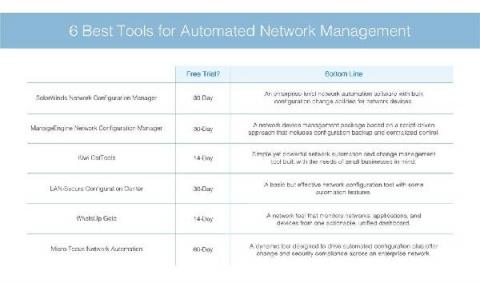
6 Best Tools for Automated Network Management + Guide

In today’s technology-driven world, network automation tools have evolved from convenience to necessity in practically every IT field. Traditionally, IT managers would issue manual command lines to manage networks, but given the size of today’s business networks, manual workflows dealing with repetitive network tasks have become time-consuming and counterproductive, often at risk of incurring errors from manual implementation.

A GraphQL Introduction: Benefits and Tips for Using This API Technology

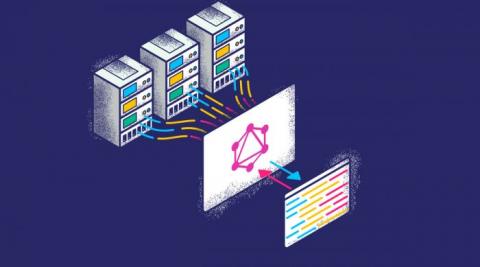
GraphQL is an open-source query and manipulation language to use for APIs. It contains server-side functionality and a query language for maintaining data interfaces. It was first created in 2012 by Facebook and publicly released in 2015. Since 2018, the GraphQL project has been hosted by the Linux Foundation and run by the GraphQL Foundation.