Operations | Monitoring | ITSM | DevOps | Cloud

What is AIOps. 4 Types of AIOps Platforms. How to Effectively Navigate the AIOps Landscape.

AIOps or Artificial Intelligence for IT Operations refers to a set of technologies that augment human decisions with autonomous decisions driven by AI and machine learning that learn patterns, relationships from data. AIOps is the term originally coined by Gartner, and pictorially illustrated in the following way.
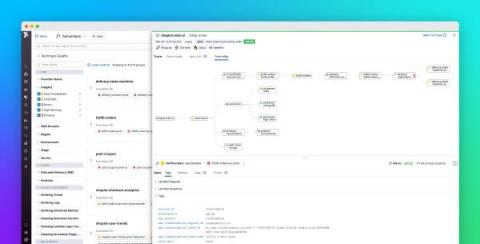
How to take action from Datadog Apps

Engineers who support production environments are tasked with resolving new issues as quickly and efficiently as possible. But as they look to carry out these responsibilities, their remediation workflows tend to take on the following pattern: For example, someone on your team might discover in a log analysis tool that a user is flooding a key service by making an abnormal number of requests.

Datadog Serverless Monitoring for Amazon API Gateway, SQS, Kinesis, and more

Many organizations leverage AWS to build fully managed, event-driven applications, which break down complex workloads into APIs, event streams, and other decentralized services in order to improve performance and scalability. This type of architecture relies primarily on AWS Lambda functions to process synchronous and asynchronous requests as they move between a workload’s resources, such as Amazon API Gateway and Amazon Kinesis.

New Research: The State of Cloud-Driven Transformation

Over the last couple years, cloud transformation has become increasingly critical, evolving from a preferable priority to an urgent imperative. In our rapidly changing world, organizations have had to innovate at unprecedented rates — and those most successful are harnessing the power of cloud to move faster and smarter. But it’s more than a simple migration.

ICYMI: Achieving Visibility in Your CI/CD Pipeline With Honeycomb + CircleCI

Before continuous integration came to be, setting up builds was no fun because the complexity and overhead involved in a release cycle was compounded by inflexible, manual processes. The release cycle was slow and often resulted in breaking changes. Continuous integration and continuous delivery (CI/CD) has changed much of that through pipelines that automate how we build and test software—today, we can deploy, have builds fail, and resolve any errors faster than ever.

Server Uptime Monitoring: What, Why, and How?

In an earlier blog post, we had discussed how server performance monitoring is not just about monitoring CPU, memory, and disk resources anymore. There is more to server performance monitoring than just three resources or metrics. That blog post covered several key performance indicators (KPIs) that IT teams must track to ensure that their servers are performing well. In this blog post, we focus on another KPI – server uptime.

Network AF, Episode 9: Learning from great mentors and by breaking things with Hank Kilmer

In a new episode of the Network AF podcast, your host Avi Freedman interviews Hank Kilmer, VP of IP engineering at Cogent. Hank has been running major internet backbones since the early 90s. He joined Cogent in 2011, and prior to that, held leadership positions with UUNET (now Verizon), Sprint, Digex, Abovenet and Terrapin Communications.

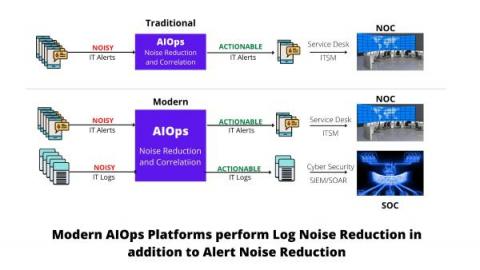
Can your AIOps platform do Log Noise Reduction in addition to Alert Noise Reduction? If not, it is time to re-evaluate your AIOps

One of the core value propositions of AIOps platforms is to increase IT efficiency & productivity by applying AI & ML techniques to perform Alert Noise Reduction. This in turn translates to direct cost reduction due to savings in IT man-hours. In this approach, the AIOps platform kind of becomes like a gatekeeper for all the IT alerts/events, and it can help effectively, reduce and correlate such events, so as to send meaningful incidents to NOC or Service Desk.

Transforming application logs into metrics with Istio and Grafana Cloud

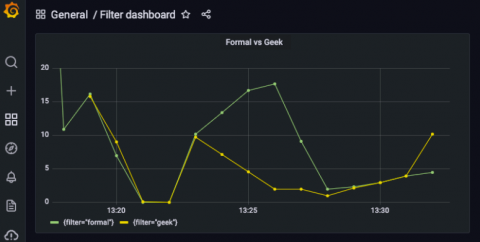
Do you actually know what your customers are looking for? A way to uncover new business opportunities is to analyze your system, collect what you really need, and visualize it through a comprehensive graph! Log traces are a great place to start because they usually contain useful information on your customers' interests. You just need to transform them.