Operations | Monitoring | ITSM | DevOps | Cloud

OpenTelemetry PHP | Monitoring a PHP application with OpenTelemetry

PHP is a widely popular server-side language and enjoys the top spot in terms of market share. Many world-famous organizations like Facebook have their applications written in PHP. WordPress, which powers 43% of all websites, is also built on PHP. In this tutorial, we will use OpenTelemetry to instrument a PHP application for telemetry data. It’s essential to monitor your PHP application for performance issues and bugs.


Setting up Route 53 Health Checks

We live in an age where the internet and digital data drive modern day markets, which results in huge amounts of data being generated and consumed. Hence, it has become very important for online platforms to manage this traffic and serve their customers more efficiently. In this blog we will explore the Amazon Route 53 service and see how it addresses domain name system routing and health check problems.

SAP on premise to AWS cloud migration: The complete guide

SAP on premise to AWS cloud migration is a key focus area for many businesses. This is no surprise given that SAP is without a doubt among the leading ERPs. SAP HANA, available both on premise and in the cloud, offers a powerful relational database ideal for data storage, retrieval and analytics in real time. The on premise iteration of SAP HANA features an SAP environment hosted on your servers.

Find out how to check my ping and the best way to check ping speed

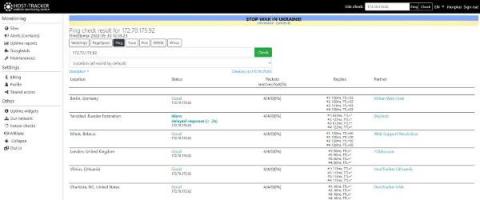
Many users are familiar with the concept of network ping. Especially those who like online games. If you are having connection problems, the most reliable way to check it is to use the "ping" command. But not everyone can answer what a ping really is. In simple words, it is a measure of the time it takes for a network request to get from user to server and back.

How to build a dashboard for any AWS CloudWatch data

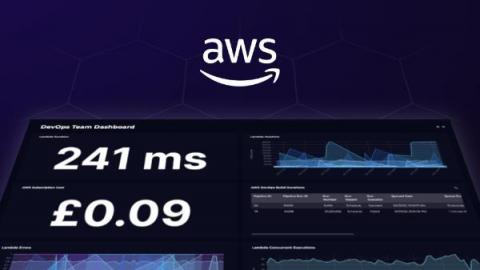
Looking to keep an eye on logs and metrics from AWS or CloudWatch? There are several reasons you might want to build a CloudWatch dashboard somewhere outside of the CloudWatch console: Whatever the reason, we’ve put together a write-up to help you plug into CloudWatch to surface any logs or metrics in one place, for easy alerting and sharing, using the SquaredUp observability portal. You can get your own SquaredUp account, just head over to squaredup.io/get-started to sign-up for a free account.

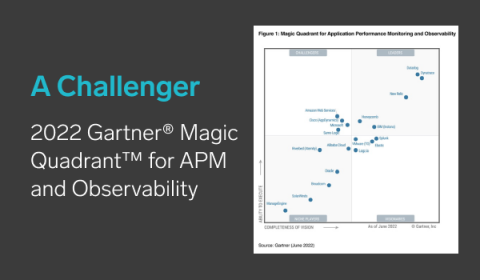
Sumo Logic - Challenging the status quo

As the applications we support evolve, so too must the services that keep them reliable and secure. And, evolve they have! Sumo Logic started life over a decade ago by solving the difficult problem of log management. Our cloud-native architecture eliminated the hassle of managing on-premise log management solutions while scaling on-demand to handle a significant volume of high-cardinality data. Powerful search made exploratory investigation fast and efficient for customers. This was a game changer!

New StackPod Episode: Defining and Executing a Clear Product Strategy With Andreas Prins

We are happy to announce our latest StackPod episode featuring guest Andreas Prins! With over five years of experience in different product management and product strategy roles, Andreas is currently the VP of product here at StackState.

Introducing the Mezmo Exporter for OpenTelemetry

At Mezmo, we see a massive opportunity to reduce Mean Time to Detection (MTTD) and Mean Time to Resolution (MTTR) by making log data more valuable and actionable. Today, we’re thrilled to announce the release of the Mezmo Exporter for OpenTelemetry- the first step in our continued work with the project to further simplify the ingestion of log data and make that data more actionable with enrichment of key OpenTelemetry attributes.

Sensu Integration Catalog: Engineering an Open Marketplace

ICYMI, the recent release of Sensu 6.7.0 introduced the Sensu Integration Catalog – an open marketplace for Sensu Go. Along with the release, we also hosted a webinar highlighting how the Sensu Integration Catalog unlocks self-service infrastructure monitoring. In the webinar, we talked about the “what and why?” – what problems does the Catalog solve, and why we decided to solve them with a marketplace.

Customers First, Always!

Software exists to make your job easier, not to suck the joy out of your work. It should be there when and if you need it, but be completely out of the way when you don’t — you’re at work to get a job done, not to use any particular product. If you’re forced into using the same underperforming, over-customized, difficult to implement, or just generally terrible software each and every day, it can really put a damper on the quality of your work and quality of life.