The ability to continue business operations for the foreseeable future is a key metric from a financial standpoint. But from a risk management perspective, all dimensions of an organization’s strategic and operational framework must be analyzed in order to… The last part relates to business resilience — and it’s what we’re going to explore here. (This article was written by Joseph Nduhiu. See more of Joseph’s contributions to Splunk Learn.)
In today’s fast-paced world, app performance equals brand reputation. Customers expect apps that are fast, responsive and available 24/7. That’s where Application Performance Monitoring (APM) comes in. The technology enables businesses to ensure the best possible user experience by monitoring and managing the performance of their applications. But as applications become increasingly complex, identifying and resolving performance issues in real-time becomes increasingly difficult.
For a long time at Honeycomb, we envisioned using the tracing data you send us to generate a service map. If you’re unfamiliar, a service map is a graph-like visualization of your system architecture that shows all of its components and dependencies. We didn’t want it to be a static service map, though—the kind you’d view once before going “huh, neat”—and then never looking at it again.
Share: VictoriaMetrics is always improving, with frequent updates adding new features, performance improvements and bug fixes listed at the CHANGELOG page. We usually make at least a single release every month. All the new features and bug fixes go to the latest release. That’s why we recommend periodically upgrading VictoriaMetrics components to the latest available release. But the latest release may also contain bugs in the latest features.
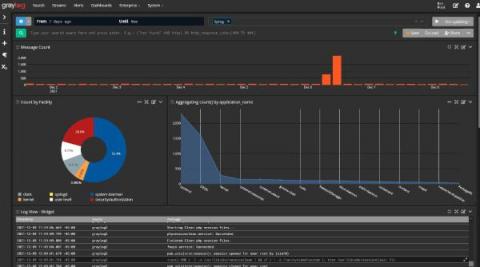
When you’re adding or subtracting fractions, you need to make sure that they have a common denominator, a number that allows you to compare values. In the same way, your IT environment needs a common “language” for your event log data. Your environment consists of various devices running different operating systems, software, and firmware.
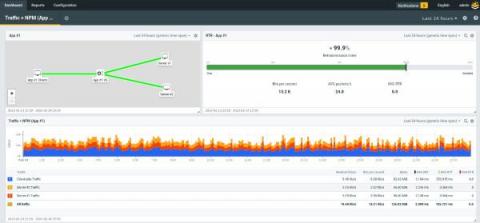
The Loadmaster Network Telemetry feature makes it easier than ever to get key insights on your applications into your Flowmon deployment. By creating both cluster-wide and application specific channels you can quickly build NPM dashboards and topologies that surface essential performance and availability metrics broken down by application, client and server.
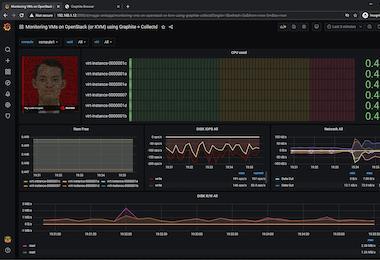
Graphite provides time-series metrics in an open-source database. With Graphite dashboards, you can see key performance indicators (KPIs) as well as other metrics visually. Dashboards typically display data as graphs, charts, and tables and can be customized to meet the specific needs of an organization. Using dashboards, organizations can monitor and analyze various aspects of their performance, such as system utilization, application performance, and resource utilization, using web interfaces.