Operations | Monitoring | ITSM | DevOps | Cloud

Sponsored Post

Operationalizing AI: MLOps, DataOps And AIOps

Originally posted on Forbes Technology Council As organizations increasingly embark on their digital transformation journey, IT is turning into a profit center, rather than a cost center. CIOs (chief information officers) are more than often referred to as chief innovation officers. New roles like chief data officer and chief analytics officer are rising to prominence. AI and data are at the center of this transformation, as CxOs are faced with daunting challenges in.

A guide to single-page application performance

Many of us have heard single-page applications (SPAs) hailed as the future of web applications. Proponents of SPAs point to increased code reusability and development velocity, and the advantage SPAs can give when it comes to delivering a fast and seamless user experience. Massive sites like Facebook, AirBnB and Trello are all built as SPAs. On the flipside, monitoring SPAs for performance is pretty challenging.

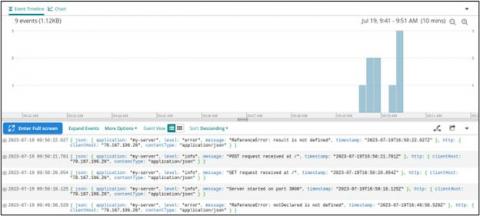
4 Node.js Logging libraries which make sophisticated logging simpler

Node.js logging, like any form of software instrumentation, isn’t an easy thing to get right. It takes time, effort, and a willingness to continue to iterate until a proper balance is struck. There are so many points to consider, including: Previously, here on the Loggly blog, I began exploring these questions in the context of three of the most popular web development languages: PHP, Python, and Ruby. But these aren’t the only popular languages in use today.

How to monitor connector's API Connections in Logic Apps?

Let us consider a scenario where a Logic App is used to communicate with SharePoint through API connections, known as connectors. When configuring the connector, it communicates with Azure AD, retrieving a username and password and continuously refreshing the authentication token. When the Logic App calls the connector, it performs operations like uploading files to SharePoint.

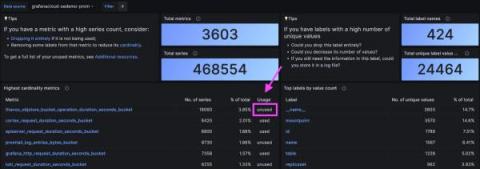
Managing Prometheus cardinality in Grafana Cloud: Adaptive Metrics FAQ

One of the most talked about topics in observability today is centered around the question of how to get more value out of the ever-increasing amount of data collected by agents, collectors, scrapers, and the like. Back in May, we announced Adaptive Metrics, a new feature in Grafana Cloud that allows you to reduce the cardinality of Prometheus metrics and the overall volume and costs of your metrics.

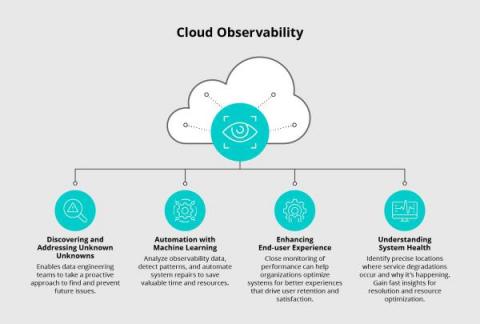
Cloud Observability: Unlocking Performance, Cost, and Security in Your Environment

A robust observability strategy forms the backbone of a successful cloud environment. By understanding cloud observability and its benefits, businesses gain the ability to closely monitor and comprehend the health and performance of various systems, applications, and services in use. This becomes particularly critical in the context of cloud computing. The resources and services are hosted in the cloud and accessed through different tools and interfaces.

IDC Market Perspective published on the Elastic AI Assistant

IDC published a Market Perspective report discussing implementations to leverage Generative AI. The report calls out the Elastic AI Assistant, its value, and the functionality it provides. Of the various AI Assistants launched across the industry, many of them have not been made available to the broader practitioner ecosystem and therefore have not been tested. With Elastic AI Assistant, we’ve scaled out of that trend to provide working capabilities now.

13 Best Cloud Cost Management Tools in 2023

Businesses are increasingly turning to cloud computing to drive innovation, scalability, and cost efficiencies. For many, managing cloud costs becomes a complex and daunting task, especially as organizations scale their cloud infrastructure and workloads. In turn, cloud cost management tools can help teams gain better visibility, control, and cost optimization of their cloud spending. These tools not only provide comprehensive solutions to track and analyze, they also optimize cloud expenses.

Modeling and Unifying DevOps Data

“How can we turn our DevOps data into useful DevSecOps data? There is so much of it! It can come from anywhere! It’s in all sorts of different formats!” While these statements are all true, there are some similarities in different parts of the DevOps lifecycle that can be used to make sense of and unify all of that data. How can we bring order to this data chaos? The same way scientists study complex phenomena — by making a conceptual model of the data.

Monitoring Redis Clusters with Prometheus

This article will outline what Redis database monitoring is and how to set up a Redis database monitoring system with MetricFire. Then we’ll show what the final graphs and dashboards look like when displayed on Grafana. We will be using Prometheus and Grafana to power the monitoring, and we'll use a simulated Redis DB to generate the data for the Grafana dashboards. ‍ ‍