Operations | Monitoring | ITSM | DevOps | Cloud

Observability with Grafana Cloud: Explore the latest and greatest features

Grafana Cloud constantly evolves to include new, cutting-edge features for end-to-end observability. In fact, just last month at ObservabilityCON 2023, we made a number of updates to our fully managed observability platform, including the general availability of Grafana Cloud Application Observability, Grafana SLO, and Adaptive Metrics.

Multi-Cluster Observability Part 2: Developing The Right Strategy

This is the second of a three-part blog series. Prior to reading this, be sure to check out Part 1, Benefiting from multi-cluster setups requires familiarity with common variations. In your Kubernetes journey, it's highly likely that you'll encounter the need to manage multiple clusters simultaneously.

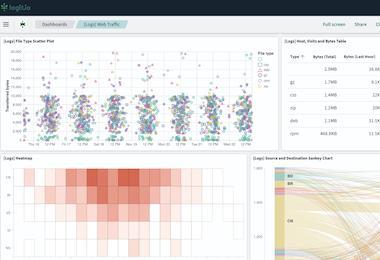
Logit.io Unveils Exciting Enhancements: Integrating OpenSearch 2.10.0

We're thrilled to share an exciting update from Logit.io. As part of our ongoing commitment to providing cutting-edge observability solutions to our users, we've integrated OpenSearch 2.10.0 into our platform, bringing a host of advanced features to enhance your experience. Let's dive into what's new and how these changes can benefit your observability workflows.

DevAlert 2.0 Now Available

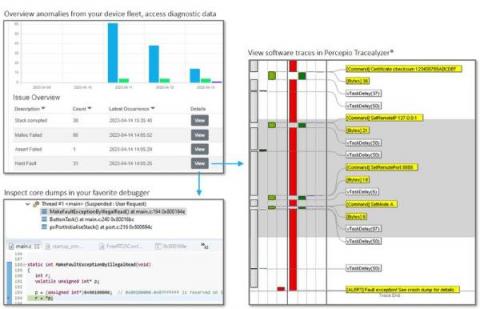
DevAlert 2.0, which is now immediately available from Percepio, is a major upgrade to our edge observability platform. The upgrade provides much improved diagnostic capabilities, including core dumps for Arm Cortex-M devices. This allows remote inspection of crashes, errors or security anomalies in full detail, including the function call stack, parameters and variables and with source code display.

How Generative AI Makes Observability Accessible for Everyone

We are pleased to share a sneak peek of Query Assistant, our latest innovation that bridges the world of declarative querying with Generative AI. Leveraging our large language models (LLMs), Coralogix’s Query Assistant translates your natural language request for insights into data queries. This delivers deep visibility into all your data for everyone in your organization.

Observability Is About Confidence

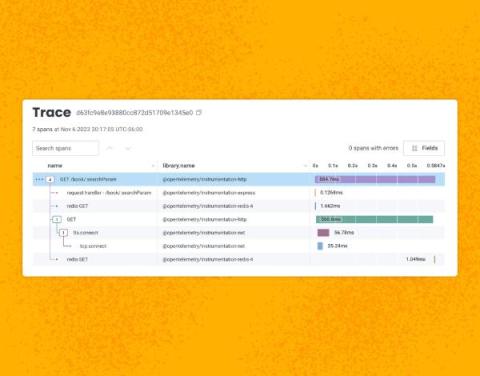
Observability is important to understand what’s happening in production. But carving out the time to add instrumentation to a codebase is daunting, and often treated as a separate task to writing features. This means that we end up instrumenting for observability long after a feature has shipped, usually when there’s a problem with it and we’ve lost all context. What if we instead treated observability similarly to how we treat tests?

Using Honeycomb for LLM Application Development

Ever since we launched Query Assistant last June, we’ve learned a lot about working with—and improving—Large Language Models (LLMs) in production with Honeycomb. Today, we’re sharing those techniques so that you can use them to achieve better outputs from your own LLM applications. The techniques in this blog are a new Honeycomb use case. You can use them today. For free. With Honeycomb.

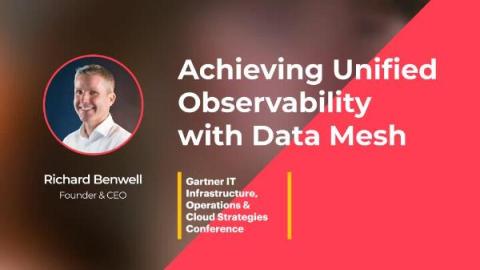
Gartner IOCS replay: Achieving unified observability with data mesh

The single pane of glass is perhaps the most enduring and elusive goal of enterprise IT operations teams. When we polled our customers a couple of years ago, out of 184 respondents, 99% of them rated it as important to their business – with 64% indicating “extremely important”. The shared dream is to have: But unfortunately, the single pane of glass has become a bit of myth.

What's the Difference between AIOps and Observability?

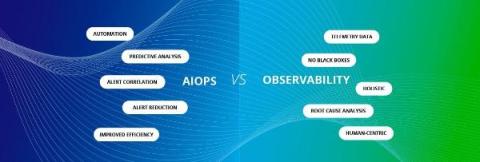
In the ever-evolving world of IT, keeping an eye on application, service and system performance and addressing issues in real-time is crucial both to an organization’s customer experience, as well as its overall success. Two terms and approaches that have gained significant attention in recent years are AIOps and observability. While they both relate to improving IT monitoring and management, they serve distinct roles in enhancing operational efficiency.

The role of observability in incident response

Observability has brought a new approach to IT infrastructure management, easing the workload on IT admins across the world and bringing more accuracy and efficiency. One of the clear beneficiaries of this evolution in IT infrastructure management is incident response. Incident response is the systematic process of identifying, analyzing, and mitigating security threats, breaches, or operational issues to minimize their impact on the continuity of business operations.