Operations | Monitoring | ITSM | DevOps | Cloud

Achieving observability in Heroku applications with Sumo Logic

Are you one of the many companies harnessing the power of Heroku to build, deliver and scale your applications seamlessly? If so, you're likely aware of the need for robust observability to ensure your Heroku environment runs smoothly. Let’s delve into the world of Heroku monitoring and explore how Sumo Logic, a leading observability platform, can provide invaluable insights into your Heroku infrastructure and application logs.

Effortless Engineering: Quick Tips for Crafting Prompts

Large Language Models (LLMs) are all the rage in software development, and for good reason: they provide crucial opportunities to positively enhance our software. At Honeycomb, we saw an opportunity in the form of Query Assistant, a feature that can help engineers ask questions of their systems in plain English.

AppDynamics Talks Optimized Self-healing with Full-stack Observability, Auto-remediation

From an IT perspective, technologists generally agree that the ability to monitor and have visibility into the IT stack across every one of their applications is essential with the now-permanent remote and hybrid work models. It also stems from the fact that digital transformation and IT growth has accelerated by seven years since the pandemic in 2020, analysts say.

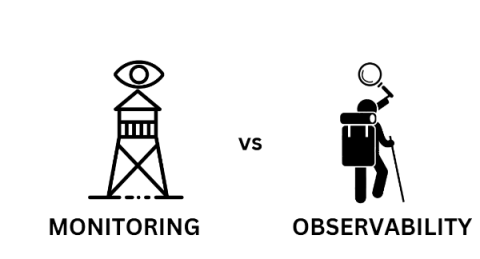
Monitoring vs Observability: What Engineers Need to Know

As systems increasingly shift towards distributed architectures to deliver application services, the roles of monitoring and observability have never been more crucial. Monitoring delivers the situational awareness you need to detect issues, while observability goes a step further, offering the analytical depth to understand the root cause of those issues. Understanding the nuanced differences between monitoring and observability is crucial for anyone responsible for system health and performance.

Challenge Met: Adopting Intelligent Observability Pipelines

Over the last year or so, the unavoidable topic of overwhelming cost has emerged as the number one issue among today’s observability practitioners. Whether it is in conversations among end users, feedback from customers and prospects, industry chatter or the coverage of experts including Gartner, the issue of massive telemetry data volumes driving unsustainable observability budgets prevails.

Start with Traces, not with Logs: How Honeycomb Helped Massdriver Reduce Alert Fatigue

Massdriver is a cloud operations platform that makes it easier for engineering teams to build, deploy, and scale cloud-native applications. While many companies use this lofty language to make similar promises, Dave Williams, CTO and co-founder at Massdriver, means it. Before Massdriver, Dave worked in product engineering where he was constantly bogged down with DevOps toil. He spent his time doing everything except what he was hired to do: write software.

Live Debugging for Critical Systems

Live debugging refers to debugging software while running in production without causing any downtime. It has gained popularity in modern software development practices, which drives many critical systems across businesses and industries. In the context of always-on, cloud-native applications, unearthing severe bugs and fixing them in real time is only possible through live debugging. Therefore, live debugging becomes an integral part of any developer’s skill set.