Operations | Monitoring | ITSM | DevOps | Cloud

Elastic Observability monitors metrics for Google Cloud in just minutes

Developers and SREs choose to host their applications on Google Cloud Platform (GCP) for its reliability, speed, and ease of use. On Google Cloud, development teams are finding additional value in migrating to Kubernetes on GKE, leveraging the latest serverless options like Cloud Run, and improving traditional, tiered applications with managed services. Elastic Observability offers 16 out-of-the-box integrations for Google Cloud services with more on the way.

Defensive Instrumentation Benefits Everyone

A lot of reasoning in content is predicated on the audience being in a modern, psychologically safe, agile sort of environment. It’s aspirational, so folks who aren’t in those environments may feel like the path there includes doing “the new thing” or using “the new tool.” If you write software and your employer hasn’t caught up to all the newest, best ways to work, I hope this pragmatic post helps you sleep better at night.

Multi-Cluster Observability Part 1: Building A Foundation

In the world of modern Kubernetes, things have come a long way from the days of a single cluster handling one app. Now, it's common to see setups that span multiple clusters across different clouds. Initially, managing those clusters was a complicated operation with many moving parts. Using tools such as SUSE Rancher, RedHat OpenShift or AWS EKS, made managing multiple clusters somewhat easier.

Kubecon 2023: Code, Culture, Community, and Kubernetes

Kubecon 2023 was more than just another conference to check off my list. It marked my first chance to work in the booth with my incredible Kentik colleagues. It let me dive deep into the code, community, and culture of Kubernetes. It was a moment when members of an underrepresented group met face-to-face and experienced an event previously not an option.

What is CI/CD observability, and how are we paving the way for more observable pipelines?

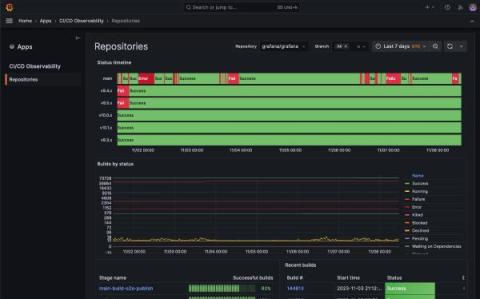
Observability isn’t just about watching for errors or monitoring for basic health signals. Instead, it goes deeper so you can understand the “why” behind the behaviors within your system. CI/CD observability plays a key part in that. It’s about gaining an in-depth view of the entire pipeline of your continuous integration and deployment systems — looking at every code check-in, every test, every build, and every deployment.

Tame observability complexity: Understanding the observability tool landscape

Choosing, deploying, maintaining, and rationalizing observability and monitoring tools can be a constant challenge for ITOps, DevOps, and SRE teams. As teams monitor increasingly complex systems, the need for instrumentation that monitors those systems grows at the same rate, leading directly to a growing problem of observability data engineering, integration, and enrichment.

What Is Observability? Key Components and Best Practices

Software systems are increasingly complex. Applications can no longer simply be understood by examining their source code or relying on traditional monitoring methods. The interplay of distributed architectures, microservices, cloud-native environments, and massive data flows requires an increasingly critical approach: observability.

Best practices to scale and modernize your observability strategy

ObservabilityCON 2023 took place in London this week, showcasing all the latest and greatest trends in open source observability. Following the opening keynote, the event featured a range of breakout sessions — led by both Grafana Labs experts and members of the Grafana OSS community — that explored observability best practices and lessons learned.