Operations | Monitoring | ITSM | DevOps | Cloud

Visualizing SAP PI/PO with SquaredUp

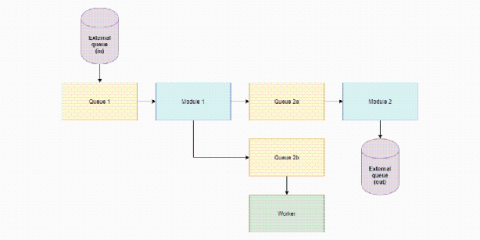
We are delighted to have a guest blog from Ruben Zimmermann, Infrastructure Architect, knowledge-sharing enthusiast and author of this cool new MP! Today, Ruben gives us a step-by-step guide on how to use SquaredUp to visualize SAP PI/PO. SAP Process Orchestration (or Integration) is a software within SAP which functions as data transformation gateway. It’s a central component of an SAP infrastructure and the standard way to communicate with external parties.

AI Meets Kubernetes: Install JupyterHub with Rancher

AI and Machine Learning are becoming critical differentiators in the technology landscape. By their nature, AI and ML are computation hungry workloads. They require best-in-class distributed computing environments to thrive. AI and ML present a perfect use case for Kubernetes, the distributed computing platform engineered at Google to run their massive workloads.

Onboarding as a remote engineer with Mattermost

We decided to make Mattermost a remote-first company for several reasons. For example, employees don’t have to waste time commuting, we are able to hire from a wider talent pool of self-motivated individuals, and we have coverage in all time zones, which helps us respond to our customers around the world more effectively. And since we’re a remote company building collaboration software, we have plenty of opportunity to dogfood our own product.

Pipelines CI/CD and the JFrog Platform Difference

With the release of the JFrog DevOps Platform, we launched the first general availability of JFrog Pipelines, our powerful system for next-generation CI/CD. Pipelines’ many great features help make DevOps pipelines automation rapid, repeatable, and secure. With flexible runtime management, a robust DSL, and a real-time interactive UI, Pipelines is a muscular CI/CD solution we know you’ll love. But what makes Pipelines different?

Transparent, resource-based pricing with Elastic Enterprise Search

Until now, standard search solution pricing has been based on models that are difficult to understand, expensive to scale, and/or beneficial to only the search vendor. At Elastic, we’re taking a different approach based on the principles of transparency, fairness, and scalability, and have introduced resource-based pricing for our products running on Elastic Cloud. And we believe that this pricing approach will revolutionize Enterprise Search buying and ownership.

What is Amazon ECS?

Many companies are moving their infrastructure and web applications to the cloud. Along with moving to the cloud, organizations are finding new ways to remain agile and nimble, especially when it comes to software. By utilizing Amazon AWS and Amazon ECS, companies are decoupling their monolithic applications and taking advantage of microservice architecture.

What Is End User Monitoring?

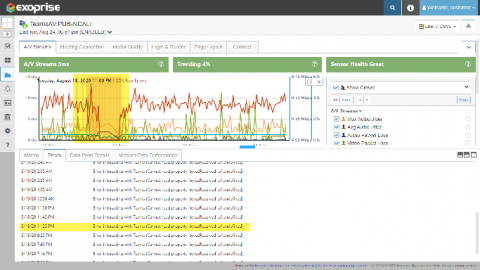
For any business to succeed, it’s important for it to reach users effectively. Almost every business today is online and therefore reaches users through applications. If you run an online business, or if you are a part of such a business, it’s important for you to know what impact your application has on your users. One of the best ways for you to know what impact your application has on the user is through end user monitoring.

The Achilles Heel - Why Our Competitors Fall Short

I often smirk when I hear or read about other companies pitching a digital experience management platform for IT support. To outsiders this claim may sound innocuous but after 30 years in IT I know most cannot even come close to understanding, let alone managing, the full Digital Employee Experience (DEX). Why? It’s best to define some terms before I draw any lines in the sand.

How to create user groups and route alerts

“Servcies&Systems” category subscriptions provide a highly flexible way of routing alerts to specific user groups. This can for instance be used to route alerts based on responsibilities or skills. But other scenarios are possible too as the category subscription mechanism is extremely powerful. SIGNL4 currently provides two fundamental ways of routing alerts. The first layer is the routing of alerts based on the “on duty” status.