Operations | Monitoring | ITSM | DevOps | Cloud

Why you need to stop the handover of that shared on-call duty phone

If you are still handing over a shared on-call duty phone or pager (sometimes called ‘operations phone’), it is time to rethink your process. The Covid19-induced new normal has a dramatic impact on our work live and social behavior. We work from home and that is especially true for the IT workforce. We meet with less people and limit our social network to relatives and close friends.

Detecting & Preventing Ransomware Through Log Management

As companies responded to the COVID-19 pandemic with remote work, cybercriminals increased their social engineering and ransomware attack methodologies. Ransomware, malicious code that automatically downloads to a user’s device and locks it from further use, has been rampant since the beginning of March 2020. According to a 2020 report by Bitdefender, ransomware attacks increased by seven times when compared year-over-year to 2019.

TL;DR InfluxDB Tech Tips - From Subqueries to Flux!

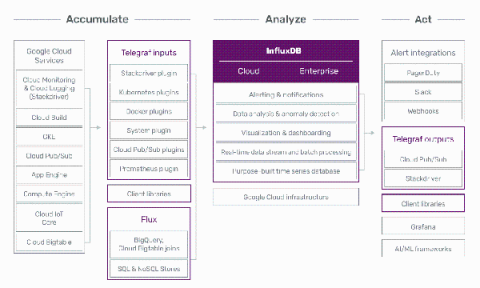
In this post we translate subqueries, using InfluxQL in InfluxDB version 1.x, into Flux, a data scripting and functional query language in InfluxDB version 1.8 and greater in either OSS or Cloud. The subqueries translated here come from this blog. This blog assumes that you have a basic understanding of Flux. If you’re entirely unfamiliar with Flux, I recommend that you check out the following documentation and blogs.

MLTK Smart Workflows

I’m excited to announce the launch of a new series of apps on Splunkbase: MLTK Smart Workflows. These apps are domain-specific workflows, built around specific use cases, that can be used to help you develop a set of machine learning models with your data. In this blog post, I’d like to take you through the process we adopted for developing the workflows.

Logging Golang Apps with ELK and Logz.io

The abundance of programming languages available today gives programmers plenty of tools with which to build applications. Whether long-established giants like Java or newcomers like Go, applications need monitoring after deployment. In this article, you will learn how to ship Golang logs to the ELK Stack and Logz.io. It’s usually possible to get an idea of what an application is doing by looking at its logs. However, log data has a tendency to grow exponentially over time.

Uptime Monitoring with Heartbeat

Whenever you build a service and expose a set of endpoints to provide API access to that service, you’ll likely need to track their availability and response times, aside from ensuring their functionality. But to actually know that “something is down” or just “not performing” you need to consistently monitor your services day in day out and that’s how Heartbeat from the Elastic Beat family helps you with Uptime Monitoring.

Take Flight with a Best-of-Breed Solution from Cherwell + Resolve

ICYMI: We recently announced that Cherwell selected Resolve as their top partner for discovery and dependency mapping. The Resolve platform seamlessly integrates with Cherwell products to provide customers deep visibility into complex infrastructure and business-critical applications, as well as to ensure their CMDBs are always up-to-date and accurate.

Mustache pickers How they help you design better dashboards

According to Merriam-Webster, a mustache is 'the hair growing on the human lip' – so let's be clear that when referring to mustache pickers in this blog, we are not suggesting using tweezer-like tools to help you design hipster dashboards. Instead, we are talking about an awesome SquaredUp productivity feature called mustache picker that helps you get quick and effective results when using mustache template syntax within SquaredUp.

How to Get Azure Blob Container Size

Something we get asked quite often is, how can I see the size of my Containers in each Storage Account? We know that Azure storage is one of the fastest growing aspects of Azure because it offers almost a limitless supply of storage, so companies are consuming more and more storage at an explosive rate. The question of being able to track this consumption is becoming more and more relevant. OK, so how can I get the size of my containers in a Storage Account?

Can Distributed Tracing Replace Logging?

Logging has been around since programming began. We use logs to debug issues and understand how software works at the code level. After logging and debuggers, profilers are a dev’s best friend when writing code and may run in production with limits to reduce overhead. As we distributed architectures — making systems more complex — centralized log aggregation was soon necessary. At that point, we had to analyze this data. Hence, log analytics technologies were born.