Operations | Monitoring | ITSM | DevOps | Cloud

Remote Support Software for MSPs

As MSPs work to support customers in 2020, they face a unique set of challenges—which is why they need dependable and robust remote support software designed specifically for their requirements. As the workforce becomes increasingly remote, it is crucial that managed service providers (MSPs) adapt their business practices to accommodate this change and properly support their customers.

3 Critical Data Points to IT Asset Tracking

As companies grow and mature, it’s easy to feel trapped in an IT asset mud pit. IT pros faced with increasing numbers of users, more complex systems, and a variety of vendor products can lose track of IT assets, let maintenance slide, and run into compatibility issues. This is especially true in the current remote work and virtual school environments. In order to simplify IT asset tracking, it’s important to monitor three critical data points.

Efficient Incident Management with Catchpoint and PagerDuty

The ability to detect and alert performance issues quickly is key to reducing the Mean Time to Resolve (MTTR). Proactive monitoring will catch incidents early on but triggering the right alerts and notifying the relevant incident management team is just as critical. Enterprises rely on multiple disparate tools to monitor different systems so there is a lot of data and noise generated which can render incident management inefficient.

Pandora FMS vs Centreon vs Nagios XI

Centreon is a solution for monitoring applications, systems and networks, based on Nagios source code. On 1st August, 2005 the company Merethis (now Centreon) was founded and began working on “their” Nagios version, calling it Oreon. In July 2007, the Oreon software changed its name to Centreon due to a name conflict with Orion (a component of the SolarWinds monitoring suite).

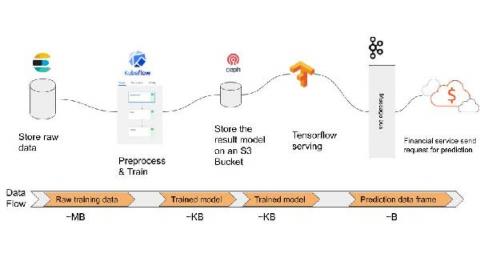
Train, evaluate, monitor, infer: End-to-end machine learning in Elastic

Machine learning pipelines have evolved tremendously in the past several years. With a wide variety of tools and frameworks out there to simplify building, training, and deployment, the turnaround time on machine learning model development has improved drastically. However, even with all these simplifications, there is still a steep learning curve associated with a lot of these tools. But not with Elastic.

Masaf Dawood on Google Cloud's Compelling Enterprise Story

Google Cloud has been gaining some noticeable traction in recent months: 43% growth in Q2 is nothing to sniff about, especially during a global recession. Masaf Dawood is director of Google Cloud services with SpringML, a premier Google Cloud partner with specialties in application development, data analytics, machine learning and marketing analytics. SpringML works exclusively with Google Cloud and has worked on 200 engagements with Google since the consultancy was founded in 2015.

AWS ECU vs vCPU-Everything You Need to Know

If you’ve deployed an application or service to the Amazon Web Service (AWS) cloud, you’ve probably made use of an EC2 instance. One of the decisions that you had to make before you could start a new instance, was which instance type to use. Choosing an EC2 instance type can be a complicated process. AWS organizes their instance types into instance families, and within an instance family, there are varying sizes from micro to 32xlarge.