Operations | Monitoring | ITSM | DevOps | Cloud

Unify APM and RUM data for full-stack visibility

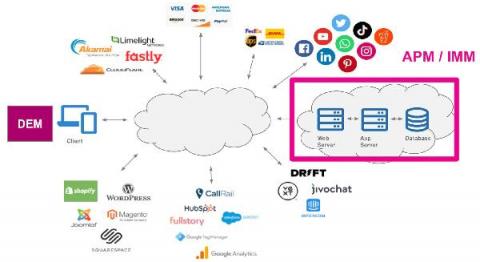
Without unified visibility across your entire stack, it can be difficult to investigate backend dependencies when troubleshooting frontend issues, or to track the source of database failures that originate from bad browser requests. Full-stack visibility gives you the insight you need to pinpoint and resolve incidents quickly.

Tell data-driven stories with Collaborative Notebooks

Whether you’re deciding on follow-up items for a postmortem, submitting a request-for-comments for review, or creating an executive report, making sense of all the available data and collaborating with others to tell a clear, data-driven story can be difficult. When there are multiple stakeholders and teams working together, it can be hard to manage the back-and-forth process of feedback and revision to ensure you have up-to-date information.

Monitor your workflows with Datadog SSL, TLS, and Multistep API tests

API tests are key to ensuring your applications receive and respond to requests efficiently. For example, a slow API endpoint or an unexpected timeout in processing a request can significantly affect user experience, so API tests can help you monitor the performance of your endpoints and the overall health of your applications.

SolarWinds Alternatives

This week, an unfortunate incident got reported by the cybersecurity firm FireEye. According to FireEye, FireEye’s system was hacked via a product they were using, called Orion. Orion is SolarWinds’ most popular product, bringing in more than 50% of their revenue every year. It is believed that hackers funded by foreign governments compromised the networks of both public and private organizations via their SolarWinds monitoring service.

How to get the size of all your Azure Storage Accounts

Do you really ever know how much Azure Storage you are consuming or how many Azure Storage Blobs you have in each of your Storage Accounts? Perhaps you just need an overview of your Azure Storage Account Consumption, including things like the number of Blobs per storage account, Number of Containers, and the Azure Blob Storage Capacity used. All this information is quite easy to gather from one of the several reports available in Cloud Storage Manager.

How Slow is Slow?

Slow is the new downtime. What you once feared from a downed website — decreased conversion rates, lower page ranks, abandoned carts — now applies to a slow-loading experience. Problem is, slow is more nuanced than downtime; that is, while downtime is binary — the site’s either up or it isn’t — slow is in the eye of its beholder. It’s why asking what makes a slow website gets the same shrug from a developer as asking them how long an afternoon is.

How to Monitor IIS Performance

Microsoft’s Internet Information Services (IIS) is a well-known web server that hosts web applications and is used in many sectors like banking, healthcare, logistics, E-commerce, etc. It is the backbone of many IT Infrastructures but if it encounters issues it can cause websites to experience higher response times. Hence, end-users often leave the website. A web server plays a vital role in an organization’s IT infrastructure.

Centralize the truth of your infrastructure with alarm notifications

Netdata is architected on every level, across both the open-source Netdata Agent and Netdata Cloud, to help you own every layer of your monitoring experience. With this design, all metrics data collected by the Netdata Agent stays distributed on your node, but you also leverage Netdata Cloud’s dashboards and multi-node visualizations to view the health and performance of an entire infrastructure from a single application.

How Flowmon Helps to Detect SUNBURST Trojan Attack in Your Network

Flowmon Anomaly Detection System from Kemp now contains Indicators of Compromise (IoC) for the SUNBURST trojan specifically. Users of the Flowmon network detection and response (NDR) tool can check if they are under attack and set up measures to detect SUNBURST. This December, the world shook at the news of several US government bodies falling victim to a highly sophisticated attack.

Mitigating Kubernetes Security Vulnerability when using ExternalIP Services (CVE-2020-8554)

Earlier this month the Kubernetes project discovered a security issue affecting multitenant clusters: If a potential attacker can already create or edit services and pods, then they may be able to intercept traffic from other pods (or nodes) in the cluster. An attacker that is able to create a ClusterIP service and set the spec.externalIPs field can intercept traffic to that IP.