Operations | Monitoring | ITSM | DevOps | Cloud

Introducing relationships for Service Monitors

Understanding a service outage is easier when you can see what it’s connected to. That’s why we’re introducing Relationships for Service Monitors, one of the most requested features from StatusGator’s hundreds of enterprise IT teams. You can now explore related services directly from the Service Details page by opening the Relationships dropdown.

ACP vs MCP: What's the difference for agentic coding?

An AI coding agent holds many conversations at once. Not only is the user prompting it, the agent also talks to the IDE, showing diffs and asking before it touches a file. At the same time it talks to tools, pulling a failing build or querying a database. Two open protocols standardize those conversations. This guide compares ACP vs MCP in practical terms: what each protocol does and when each applies. ACP (Agent Client Protocol) connects a code editor to an AI coding agent.

Autoscaling Checkly Private Location Agents in Kubernetes with KEDA

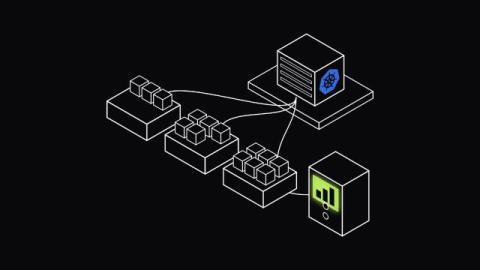
Monitoring load is not always steady. A team might add a new batch of checks or run several ad hoc tests during a rollout. When that happens, your Private Location agents need to pick up more work at once. If there aren’t enough agents available during a burst, checks start piling up in the queue, which can delay or disrupt check execution. But solving this by running a high number of agents around the clock has the opposite problem: most of that capacity sits idle until the next busy period.

Any Apple update can break our app. Here's how we find out first.

This is a guest post by Dan Mindru, a Frontend Developer and Designer who is also the co-host of the Morning Maker Show. Dan is currently developing a number of applications including PageUI, Clobbr, and CronTool. It feels like with every release, we are walking a tightrope. We need to keep our app lightweight, stable, and performant, all the while depending on APIs that can shift at any moment (without warning, too!).

Self-Healing ITOps: Close the Loop From Detection to Resolution

Self-healing ITOps helps restore services faster by combining AI-driven analysis, automation, and recovery validation. Organizations have invested heavily in monitoring, observability, and AIOps. These platforms are effective at identifying issues, but incident resolution is often still a manual process. Engineers still need to investigate alerts, determine the appropriate remediation, and verify that services have recovered.

When One Agent Plans and Another Executes, the Planner's View Decides Everything

Split network operations into a planning agent and an executing agent and you have an elegant design on paper. One agent reasons about what should change and validates it. The other carries it out. The elegance is real, and so is the structural consequence: the split puts the entire weight of judgment on the planner. A plan built on a partial view, then executed precisely and at machine speed, is more dangerous than a cautious human who would have hesitated at the part that did not add up.

New in Skylar One - Kyoto: Better Context for Faster, More Confident IT Operations

Modern IT environments do not fail in neat, isolated ways. A network issue in one location can affect a business service somewhere else. A device alert may be the first sign of a larger dependency problem. And when teams are managing infrastructure across data centers, cloud, branches, campuses, and edge environments, the first challenge is often knowing where to look first. The issue is not alert volume alone. It is the missing context between telemetry, service impact, probable cause, and action.

Rewiring Operations for the Agentic Era: The 4 Decisions on the CEO's Desk

For two years, the enterprise's question about AI was which model to buy. That question is already settling. Frontier capability is becoming abundant - rentable by anyone, swappable in an afternoon, and roughly identical in your hands and your competitor's. An advantage everyone can buy is not an advantage. What can't be bought is the thing underneath it: a system that has learned how your business actually works - the intelligence your enterprise accumulates and no competitor can replicate.

Designing the New Workloads Dashboard for Rancher

To meet community demand, we have restored the global workload overview in Rancher Manager. After previously removing the feature due to performance constraints, we prioritized user feedback and rebuilt it from the ground up. Powered by a new, optimized API, the updated UI is both highly scalable and resilient.