Operations | Monitoring | ITSM | DevOps | Cloud

The Difference Between Keeping Up and Catching Up

It is common to find two organizations running the same platform, staffed by people of similar skill, operating under comparable budgets, and arriving at completely different relationships with the technology they depend on. For enterprise IT teams, this often shows up in how they manage platform releases, integrations, upgrades, and ongoing maintenance.

Fly Graduates: Agentic Repository Experience Lands in the JFrog Platform

The way software gets built is changing faster than at any point in the last decade, and the software supply chain has to keep up. A year ago at swampUp, we introduced JFrog Fly: the first agentic repository, serving as a fast, AI-native environment to build what a modern, agentic developer workflow could look like, unconstrained by the shape of the enterprise stack. Today, we’re bringing what we learned back home.

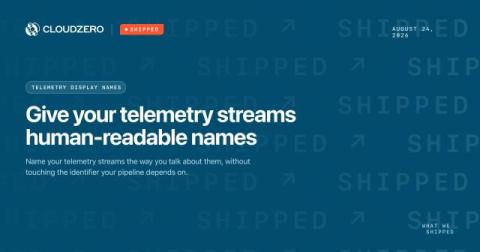
Shipped: Give your telemetry streams human-readable names

Telemetry streams carry the unit metrics behind every cost-per-unit number you report. Now each one can say in plain language what it measures. You can call a stream whatever you want to: “MCP tool calls” or “Checkout transactions” or “Documents processed.” Spaces, capitals, and punctuation all work, and you can change the name whenever the metric’s purpose gets clearer. The identifier the pipeline uses stays exactly where it is.

The Hidden Costs of Inefficient Inventory Management

When businesses look at how healthy their operations are, they often zero in on the most obvious costs: rent, salaries, and marketing. Inventory usually falls into this category too, with its costs simply seen as the price of goods and warehouse storage. But this narrow view misses a whole network of hidden expenses that come from managing inventory poorly. These less obvious costs can quietly eat into profits, stretch resources thin, and slow down growth, affecting much more than just the bottom line.

Does Your Membership Data End Up in Three Places at Once?

Ask an association administrator where the member list lives and the answer is rarely a single system. It is usually a database of some kind, plus a spreadsheet that somebody maintains for the board, plus whatever the email tool has stored, plus a payment processor holding its own version of everyone's contact details.

How Global Hiring Helps Remote Teams Access Hard-to-Find Tech Talent

Remote work has done more than just redefine the workplace. It has fundamentally changed the way companies have hired employees for decades. Employers used to be limited to hiring from a talent pool of individuals who are geographically proximate to the company's physical location. That was painful enough back then. Today? With local talent wars for developers, DevOps gurus, and cybersecurity pros turning into absolute bloodbaths, sticking to your local backyard is a recipe for stalled roadmaps.

Why Temporary Phone Numbers Are Becoming a Modern Digital Essential

Today, a phone number is essential for communication. It is used not only to call friends or relatives, but also to register on various websites and apps, and to verify accounts. At the same time, a single personal number can gradually become associated with numerous platforms you use in everyday life.

Common Inventory Problems RFID Tracking Can Help Resolve

Inventory problems can develop when stock moves through receiving areas, storage locations, sales floors, production spaces, and shipping points without dependable visibility. Missing items, inaccurate quantities, and outdated location records can disrupt fulfillment and leave employees searching for stock that should be readily available. Automated identification provides detailed item and location data that helps inventory teams maintain accurate operational records.

How Startups Can Avoid the Very Common CRM Regret

Most founders don't spend a lot of time choosing their first CRM. There's too much else going on. Someone on the team suggests a tool they've used before, a few demos happen in the same week, and the decision gets made in a couple of days. Fast forward a year, and that CRM is either half-empty or so over-customised that nobody trusts the data in it.