The latest News and Information on DevOps, CI/CD, Automation and related technologies.
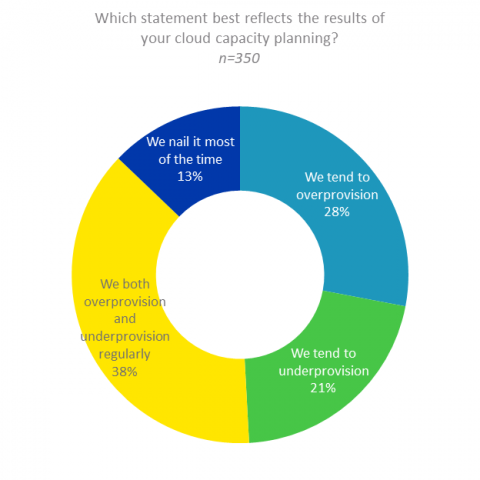
The goal of capacity planning is to match resources with demand. There are essentially three outcomes from this analysis. You can underestimate the resources you need (underprovision), which can hurt performance. You can overestimate (overprovision), which adds unnecessary costs. Or you can get it just right (rightsized). And, of course, you want to be rightsized at the lowest possible cost. Because many factors go into cloud capacity planning, it can feel like more of an art than a science.
In the era of cloud-native development, as businesses rely on a growing number of software tools to enable agile application delivery, platform engineering has emerged as a crucial discipline for building the technology platforms that drive DevOps efficiency. In this blog post, we explain the growing importance of platform engineering in high-performance DevOps organizations and how platform teams enable DevOps efficiency, agility, and productivity.
Most SRE teams eventually reach a point in their existence where they appear unable to meet all the demands placed upon them. This is when these teams may need to scale. However, it's important to understand that increasing team capacity is not the same as increasing the number of people on the team. Let's unpack what scaling a team is all about, what are the indicators, what are steps you can take, and how you know if you're done.
In the ever-changing, fast-paced world of software development, Agile and DevOps are some of the most resilient methodologies that stand the test of time. Whether you’re a business leader, a project lead, or an operations manager desperately trying to sync your developer with other departments, when you think of Agile, you should think of flexibility and continuous improvement.
The idea of ‘collaboration’ in software development isn’t new. More often than not, delivery of a software product is only possible because of teamwork and combined effort. Over time, collaboration has risen to priority one in the tech world, and some tools now make it seamless to share resources and work across even the largest of teams. In this article, we are going to be exploring GitHub, a collaboration platform that helps teams work and ship products together.
Code review is not just a helpful practice for any software-related organization, it’s necessary. It is an essential component of the software development process that paves the path for developers to identify bugs and improve the overall quality of their end products. Code reviews are even more critical today given the popularity of remote work and distributed teams. GitKraken Client is a powerful tool that helps developers manage and review code.
GitKraken Client makes working with GitHub simple thanks to a great GitHub Integration. The GitHub integration allows you to sign in using GitHub, which will automatically connect the integration. Or you can manually connect the integration from Preferences > Integrations > GitHub. Once connected, you’ll be able to easily create repositories on GitHub, clone repositories from your GitHub account, work with pull requests, manage GitHub issues, and much more.
In April 2023, Amazon Web Services (AWS) released a new functionality that allows users running Ubuntu LTS to upgrade their instances to Ubuntu Pro with just a few clicks. This upgrade provides additional security features, including patching for universe packages, extended security management for an additional five years, live kernel patching, and access to FedRamp and FIPS modules.
Cloud CI/CD is a force multiplier for development teams, especially those working remotely. Automated CI/CD takes load off of developers, allowing them to focus on building better products. Hosted CI/CD adds further benefit to this, ensuring that this newfound capacity isn’t spent managing the testing and deployment infrastructure, and that remote team members have easy access to CI/CD tools.