How to see the size of all your azure storage accounts and subscriptions
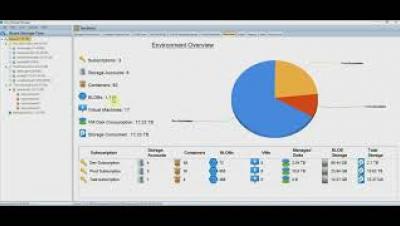
See how you can gain insights in to your Azure Blob Storage with Cloud Storage Manager. Want to Know Why Your Azure Storage costs have increased?


The latest News and Information on Cloud monitoring, security and related technologies.
Heroku meets the needs of individual developers who want to deploy their applications seamlessly. The only requirement is to use a git repository and link your git repository to your Heroku account. However, for startups, Heroku has limitations. Those arguments make most of the startups moving away from Heroku to a more flexible place like AWS - which has 31% market share in Q2 2020.
Engineering teams that build, scale, and manage cloud-based applications on AWS know that at some point in time, their applications and infrastructure will be under attack. But as applications expand and new features are added, securing the full scope of an AWS environment becomes an increasingly complex task. To add visibility and auditability, AWS CloudTrail tracks the who, what, where, and when of activity that occurs in your AWS environment and records this activity in the form of audit logs.
Over the past several months we’ve been focused on improving observability and operations workflows for Compute Engine. Today, we are excited to share the first wave of these enhancements are now available. These include: Significantly improved operating system support for the Cloud Monitoring and Cloud Logging agents. The ability to rapidly deploy, update, and remove agents to groups of VMs, or all of your VMs, by policy, with as little as a single gcloud command.
There are an increasing number of organizations, who are moving their Virtual Apps and Desktops deployments to Citrix Cloud by using the Virtual Apps and Desktops service. Citrix Cloud allows you to host components such as your core management layer for a Virtual Apps and Desktops deployment in the cloud, managed and kept up to date by Citrix.
When something as ubiquitous as Google goes down, there is a lot of online frenzy with users tweeting and searching for updates on the issue. That’s exactly what we witnessed today between 9/24/2020 17:59:44 PST to 9/24/2020 18:23:20 PST. Multiple Google services like Mail, Drive, Meet, Hangouts experienced downtime. Frustrated users took to Twitter to report the outage and the tweets were captured by Websee. Users trying to access Google services got a 502 error screen.