Operations | Monitoring | ITSM | DevOps | Cloud

The latest News and Information on Cloud monitoring, security and related technologies.

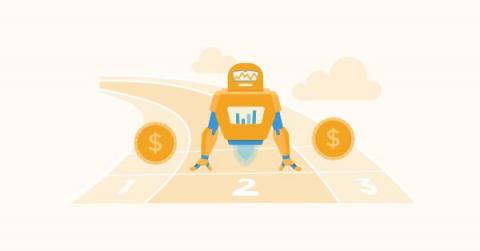
Keep control of your Organization's Usage with our New Organization Usage page. #Blackfire

Predicting the traffic of our #applications is as challenging as forecasting the weather. Whether it’s a sudden spike in your apps’ traffic, a set of bugs pushed in #production, or even a full-on #cyberattack, unexpected surges can bring significant consequences. We may have the facts to anticipate a solid estimate, but we can’t plan for the anomalies. This is a concern shared by many #blackfire Monitoring customers. And it’s directly linked to ensuring you have the right amount of traces to maintain your applications’ continuous instrumentation—while controlling costs.

Logic App Best practices, Tips, and Tricks: #14 Implement good governance policies

Welcome again to another Logic Apps Best practices, Tips, and Tricks. In my previous blog posts, I talked about some of the most essential best practices you should have while working with the Azure Logic App: And some tips and tricks: Today I’m going to speak about another critical Best practice, Tips and Tricks that you need to implement while administrating your cloud integration resources: Implement good governance policies.

Tracing and Observing AWS ECS

It’s no secret that application containerization has revolutionized the digital world as we know it by providing a transient gateway into elastic infrastructure that can scale and grow as needed. Where traditional virtualization was all about creating a single homogenous entity, containers are self-contained units of software, able to run in just about any environment, making them extremely portable.

Proton Drive vs Google Drive: Cloud Storage Privacy or Convenience?

Big name or underdog? Privacy or convenience? Proton Drive or Google Drive? Google Drive has a long history and is the usual top dog when it comes to online cloud storage and collaboration. Proton Drive is new, and rather than try to go toe-to-toe with Google in size, it has instead chosen to take the high road and focus on privacy. Both services have plenty going for them, and both clouds have a few dark spots that could be improved.

Cloud Governance vs. Cloud Management

The cloud has revolutionized the way businesses operate. It allows organizations to access computing resources and data storage over the internet instead of relying on on-premises servers and infrastructure. While this flexibility is one of the main benefits of using the cloud, it can also create security and compliance challenges for organizations. That’s where cloud governance comes in. Cloud governance is a framework for managing and regulating how data is accessed and used in the cloud.

Measuring Cloud Instance Costs for FinOps

Achieving cost savings is one of the main drivers for cloud adoption. But for most companies, controlling cloud spend is much more challenging than anticipated. In a recent survey, 94% of IT decision makers report they are overspending in the cloud. Our own survey on cloud costs revealed 90% of executives say better cloud cost management and cost reduction is a top priority.

How to monitor Couchbase with Google Cloud Ops

You can now easily monitor couchbase metrics and logs in Google Cloud. All of our logging and monitoring Google Cloud contributions are available through the Google Ops Agent GitHub repository. You can check it out here! The Google Ops Agent uses the built-in Prometheus exporter and receiver to monitor Couchbase sources running Couchbase 7.0. You can find documentation on the Prometheus exporter in the Couchbase documentation.

What Are Privacy Acts? And Why Are They Important for Your Business?

Control over our privacy is something we should all be entitled to. Privacy is a human right after all and that should be the case whether we’re on or offline. Good news is many countries around the world have introduced privacy acts for both online and offline data use over the recent years. With the internet growing astronomically in such a short period of time, more concern than ever has been placed on user data and how it's gathered, stored, and used by those who acquire it.