Operations | Monitoring | ITSM | DevOps | Cloud

We Measured AI Impact for 12 Months. Here's What Actually Happened.

When we rolled out AI coding tools across our engineering team, the first few weeks felt great. Developers were enthusiastic. Acceptance rates looked healthy. Everyone said they felt more productive. Then my CEO asked me a simple question: “Is it working?” And I realized I didn’t have a good answer. Feeling productive and being productive are not the same thing.

Introducing Skylar Advisor: You Need an Advisor, Not an AI Assistant

Skylar Advisor is a next-generation experience powered by Skylar AI, built to help IT teams focus on what matters right now. In this video, ScienceLogic Chief Product Officer Michael Nappi shares how Skylar Advisor proactively curates and summarizes key signals across monitoring tools, logs, and streaming telemetry into clear advisories your team can act on in seconds.

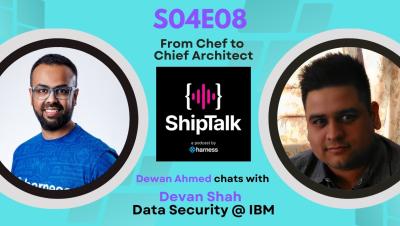
"Crown Jewels In, Crown Jewels Out" - The Hidden Risk of AI

How do you secure data in the age of Agentic AI? In this episode of ShipTalk, Dewan Ahmed sits down with Devan Shah, Chief Architect of Data Security at IBM, to explore the massive shift from traditional DevOps to AI-infused software delivery. Devan shares his journey from being a chef to leading an "army" of 450+ developers at IBM. They dive deep into the technical bedrock of IBM’s "OnePipeline" (built on Tekton and Argo CD), the rise of Data Security Posture Management (DSPM), and the architectural principles required to ship AI features without compromising security or compliance.

SRE Report: AI optimism and the economics of effort

For eight years, the survey behind the SRE Report has used a consistent methodology. That consistency allows us to track how reliability work evolves over time, rather than relying on snapshots. One of the most stable questions in the survey asks respondents to estimate how much of their work, on average, is spent on toil. Between 2020 and 2024, responses showed a gradual decline in reported toil.

Build, buy, or open source? Understanding your options with Grafana's AI-powered observability

Some questions in engineering never go away. Here’s one that every team eventually confronts: Do we roll up our sleeves and build the tooling ourselves, or do we buy something built for us? It’s a choice that has the power to speed teams up or hold them back. With the rise of AI-powered observability, this familiar software dilemma has re-emerged with higher stakes and faster-moving technology.

What problem is agentic AI trying to solve?

Agentic AI isn’t limited to security operations. It’s already improving hospitals, financial systems, and service industries by reducing overload and filling skill gaps. Here’s the problem it was actually built to solve. Additional Resources: About Elastic Elastic, the Search AI Company, enables everyone to find the answers they need in real time, using all their data, at scale. Elastic’s solutions for search, observability, and security are built on the Elastic Search AI Platform — the development platform used by thousands of companies, including more than 50% of the Fortune 500.

Agentic AI in DevOps: The Architect's Guide to Autonomous Infrastructure | Harness Blog

For the last decade, the holy grail of DevOps has been Automation. We spent years writing Bash scripts to move files, Terraform to provision servers, and Ansible to configure them. And for a while, it felt like magic. But any seasoned engineer knows the dirty secret of automation: it is brittle. Automation is deterministic. It only does exactly what you tell it to do. It has no brain. It cannot reason.

AI NetOps: How AI and Machine Learning Transform Network Operations

AI is changing network operations (NetOps) from static automation into adaptive, data-driven systems that can summarize incidents, retrieve knowledge, and guide remediation with human oversight. In this talk, Phil Gervasi breaks down what “AI for NetOps” really means in practice, including the difference between classical ML and large language models (LLMs), why data pipelines matter more than model tuning, and how patterns like RAG (retrieval augmented generation), text-to-SQL, and agentic workflows turn raw telemetry into decisions.