Operations | Monitoring | ITSM | DevOps | Cloud

The AI Engineering Playbook: How to Evaluate & Iterate at Every Phase of Development

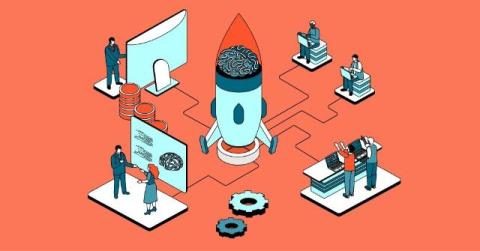
AI coding tools are accelerating development velocity, creating a release challenge most teams aren’t equipped for. Without controlled rollout, higher change velocity makes it harder to know which specific release drove the results you’re seeing in production. And when teams use AI, to build AI – LLM apps and AI agents– complexity multiplies. Traditional observability can’t ensure AI agent quality, performance, and cost-efficiency at production scale.


Claude Routines Need a Governed Home: Centralizing What Your AI Agents Can Reach

Claude Routines are a great automation primitive. But the network rules that decide what an agent can reach are set per engineer - and that's the real enterprise risk. Here's why Routines need a centrally governed home. Romaric founded Qovery to make Kubernetes accessible to every engineering team. He writes about platform strategy, developer experience, and the future of cloud infrastructure.

Language AI to physical AI explained

What is physical AI? Physical AI embeds machine learning directly into hardware, enabling algorithms to interact, move, and perform autonomous tasks in the physical world. Traditionally, robots relied on precise, hardcoded coordinates; if an object shifted by a single millimeter, the entire system failed. Today, robotics is moving past rigid automation toward truly adaptive architecture. Neural networks help machines process raw sensor data in real time. Consequently, machines can dynamically reason through the unpredictable physical world.

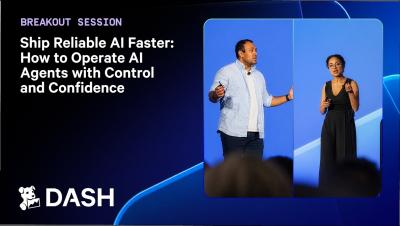
Ship Reliable AI Faster: How to Operate AI Agents with Control and Confidence

Replace "AI shipped on hope" with an operating model that holds up once real users depend on it. AI quality is multi-dimensional, covering accuracy, tone, safety, and faithfulness to user data, and can't be debugged from outputs alone. Without visibility into what their AI actually did in production, teams miss regressions, reverse-engineer chains by hand, and watch a single bad answer erode trust built over hundreds of right ones.

The AI vendors just started watching the meter. CFOs need to watch the return.

On June 18, OpenAI gave ChatGPT Enterprise admins new credit usage analytics and spend controls. It’s a single view of credit consumption broken down by user, product, and model, default workspace budgets, per-group limits, and a Cost API for pulling the data into their own systems. Two days earlier, Microsoft shipped Copilot Cowork with spending limits, budget allocation, usage alerts, and user-level caps. This is a step in the right direction.

Seedance 2.5: Cinematic AI Storytelling

In the rapidly expanding digital economy, the ability to produce high-quality video content at scale has become the primary competitive advantage for e-commerce brands, self-media creators, and digital production studios. As audience attention spans continue to shrink, the necessity for high-fidelity, emotionally resonant, and visually consistent video content has reached an all-time high. This is where Seedance 2.5 enters the picture, representing a significant leap forward in generative AI video technology.

The secret behind Carnegie's fortune and the lesson for the AI era

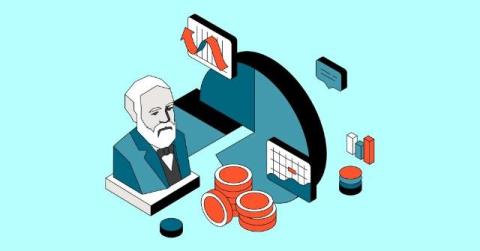
Point A: 1835. Andrew Carnegie is born in a weaver’s cottage in Dunfermline, Scotland. The cottage has one main room, which the Carnegies share with another family. Point B: 1901. Andrew Carnegie becomes the richest man in the world when Carnegie Steel Company wins the Iron vs. Steel industrialists’ war, and he sells the company to J.P. Morgan for the modern equivalent of $450 billion.