Operations | Monitoring | ITSM | DevOps | Cloud

The latest News and Information on Incident Management, On-Call, Incident Response and related technologies.

How to Manage Cloud Alerts: AWS, Azure, and Google Cloud

To manage cloud alerts effectively, define which conditions require immediate action, include useful incident context, and route critical notifications to the engineer currently on call. Add escalation rules for unanswered alerts and test the entire path from detection to response. This process applies whether your team uses AWS, Azure, Google Cloud, or several providers. Cloud monitoring can tell you something is wrong.
The October 8, 2026 Google Cloud Storage Outage

Google Cloud Storage in us-central1 (Iowa) had elevated latency and error rates on upload and write operations on October 8, 2026, and a smaller subset of reads was also affected, according to Google's incident page. Google records the start at 11:00 UTC and the end at 23:30 UTC the same day - 12 hours 30 minutes. The outage report - fetched on October 12, 2026 - includes a preliminary incident report as of this writing.

The recovery playbook every IT team needs to get ahead of downtime

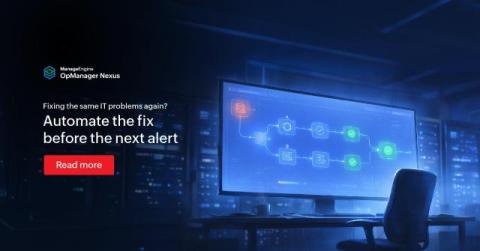
Most downtime doesn't come from problems your team can't solve. It comes from problems they've already solved sitting in a runbook or a text file, waiting for someone to run the fix manually. The fix is documented, and the steps are proven, yet the recovery still takes 40 minutes because a human has to log in and type it out. Workflow automation exists specifically to close that gap: The fix runs the moment the alert is triggered, not when someone sees it.

Building Reliable IT Infrastructures

Downtime is expensive, and it’s getting harder to avoid. Every year, enterprise IT environments grow more distributed, dynamic, and difficult to maintain with legacy tools and manual processes. With unplanned outages costing enterprises nearly $25,000 per minute, establishing and maintaining a resilient IT infrastructure is essential. Enterprises have already invested heavily in resilient architecture.

8 Best AI SRE Tools in 2026 for Incident Investigation and Reliability

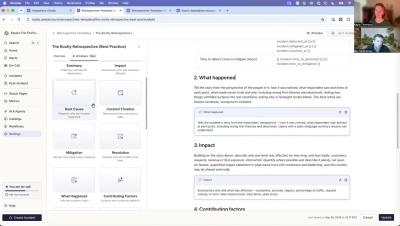
The best AI SRE tools to evaluate in 2026 include Sherlocks AI, Resolve AI, Traversal, Cleric, Rootly AI SRE, Komodor Klaudia, Datadog Bits Investigation, and Dynatrace Intelligence. Each addresses a different part of reliability work, from investigating alerts across multiple systems to diagnosing Kubernetes failures or validating production changes. Choosing the right tool starts with a practical question: where does your team lose time during an incident?

10 Best AI Logging Tools in 2026: Features, Pricing & Comparison

As businesses increasingly integrate artificial intelligence into their applications and workflows, understanding what happens behind the scenes of these AI systems has become essential. AI-powered chatbots, large language models (LLMs), and autonomous AI agents can process thousands of requests, interact with external applications, and execute complex tasks. However, when something goes wrong, identifying the source of the problem isn’t always straightforward. Was the AI response incorrect?

Stop rewriting the same update with AI-Powered Incident Communications

This blog post is part of PagerDuty’s ongoing series on how we’re helping customers navigate their journey towards autonomous operations. Read on to learn about how PagerDuty’s AI-Powered Incident Communications builds towards this vision.

Find answers faster with PagerDuty Docs: one site for engineers and the AI assistants they work with

This blog post is part of PagerDuty’s ongoing series on how we’re helping customers navigate their journey towards autonomous operations. Read on to learn about how PagerDuty’s PagerDuty Docs recently announced in builds towards this vision. Documentation is the living manual for any product. Over 68% of developers still turn to docs first when learning a new tool, and 84% now use an AI tool daily. Those two numbers together change what documentation is for.