Operations | Monitoring | ITSM | DevOps | Cloud

The latest News and Information on DevOps, CI/CD, Automation and related technologies.

3 Cost Considerations For Your Multi-Cloud Environment

A multi-cloud strategy has become the status quo for many organisations. It provides access to the broadest range of cloud services and best-of-breed technologies, along with a reduced risk of vendor lock-in. As a result, most organisations will use a number of the most popular service options alongside more niche or localised offerings.

Embedded Linux development on Ubuntu - Part III

Welcome to the concluding chapter of this journey on embedded Linux development with Ubuntu. We covered a lot of ground, so let us quickly recap what we learned so far. In Part I we introduced Snaps, software packages designed for the world of IoT. Snap packages isolate and encapsulate an entire application, increasing the security and stability of embedded devices. Snapcraft is the command-line tool to build snaps.

The 4 Golden Signals for Monitoring Kubernetes: Everything You Need to Know

Kubernetes is currently the de-facto container orchestration system on the market. Both small and large companies adopt it, and all major cloud providers offer it as a service. However, Kubernetes is a complex and layered platform, so you can’t just jump into it. There are three essential stages for each application: design, deployment, and operation. This blog post will focus on operation, where you need to monitor and troubleshoot your deployed applications.

CI/CD Pipelines for Kubernetes: Best Practices and Tools

Kubernetes is today’s leading container management platform, due to its comprehensive API and developer-friendly features. Using Kubernetes, you can create scalable and reliable applications that run on-premises systems and public clouds. Its out-of-the-box features allow it to distribute hundreds of instances over data centers and keep them up and running. In order to catch up with the automation level of Kubernetes, developing and deploying applications requires more autonomy.

Getting The Most Out Of Docker

Docker is the industry leader in the world of containerization. While the concept of containers is not new, still, it was not easy to create new containers. The underlying operating system complexities of creating a container were very challenging. Docker changed that and made things easier by handling the complexities mentioned above to launch a container. It's now super easy for developers to build, manage, scale and deploy their applications securely using Docker.
Sponsored Post

Simplifying SLO and Error Budget tracking for SRE teams

Service level objectives (SLOs), and the subsequent service level indicators (SLIs) are the foundation to establishing a strong SRE culture and how they promote accountability, trust and timely innovation. We are on a mission to simplify SLO and Error Budget tracking and with that aim in mind, we have added the SLO Tracker feature to the Squadcast platform. SLO Tracker seeks to provide a simple and effective way to keep track of your error budget burn rate without the hassle of configuring and aggregating multiple data sources.

Monitor PlanetScale with Datadog

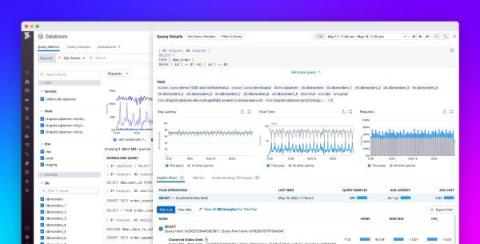
PlanetScale is a serverless, MySQL-compatible database platform powered by Vitess. PlanetScale handles database scaling while also providing you with the tools to increase your development velocity, such as branching, non-blocking schema changes, automatic backups, built-in connection pooling, as well as a helpful interface and CLI. Datadog’s new integration gives you deep visibility into your PlanetScale databases, so you can optimize your usage and costs.

Red Hat Shares - Cloud services basics

Enterprises spent US$178 billion on cloud infrastructure services in 2021, 37% more than in 2020. And “global spending on cloud services is expected to reach over US$482 billion in 2022.” Clearly the use of cloud services is on the rise. But what are cloud services exactly, and why are they beneficial? Cloud services are infrastructure, platforms, or software that are hosted by third-party providers and made available to users through the internet.

Serverless vs containers: Which is best for your application?

To keep ahead of the curve, many organizations are looking at how to evolve their technical processes to accelerate their IT infrastructure development. Fast and robust deployments to the latest platforms are key to achieving the low lead times that enable this evolution. Two of the most widely-used technologies to host these deployments are serverless functions and containers. What are they, how do they differ, and how do you decide which is best for your application?