Operations | Monitoring | ITSM | DevOps | Cloud

The latest News and Information on DevOps, CI/CD, Automation and related technologies.

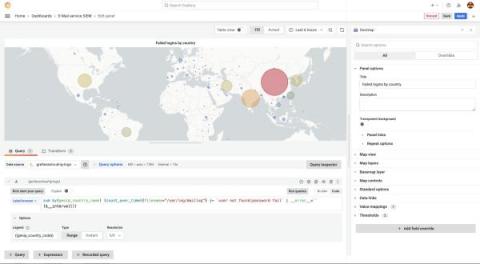
Protect PII and add geolocation data: Monitoring legacy systems with Grafana

Legacy systems often present a challenge when you try to integrate them with modern monitoring tools, especially when they generate log files that contain personally identifiable information (PII) and IP addresses. Thankfully, Grafana Cloud, which is built to work with modern observability tools and data sources, makes it easy to monitor your legacy environments too.

Introducing Native IPSec Support

Today, we are thrilled to announce a major upgrade to the security of your networks and infrastructure on the Cycle platform. With the most recent update, our team has added IPSec support to Cycle’s Compute layer. If you’re not familiar with IPSec, it’s a suite of different encryption and authentication protocols which enables secure communication between servers.

What is Azure Read-Access Geo-Redundant Storage?

As cloud storage becomes more popular, businesses are constantly looking for ways to improve their data storage solutions. One of the most popular cloud storage solutions is Azure Read-Access Geo-Redundant Storage, or RA-GRS. In this article, we will provide a comprehensive guide to Azure Read-Access Geo-Redundant Storage, including what it is, how it works, and its benefits.

Trust no one: Why businesses should adopt zero trust deployment

Businesses want to earn the trust of their customers. This explains why every brand dreams of ranking on the surveys that ask consumers for their most trusted brands. People, after all, trust their friends, family, and loved ones. If a brand can enjoy the same type of relationship with their customers, they will keep them for the long haul. Unfortunately, trust is easily broken. One of the quickest ways to do so as a digital business is to fall victim to a security breach.

Oracle Database monitoring: An administrator's guide

Oracle Database is known for its reliability, scalability, and outstanding performance. An enterprise-friendly feature catalogue makes it a go-to for companies that need data to be available across their disparate IT infrastructure. Large-scale enterprises relying on huge database systems like Oracle need to make sure that data transactions are hassle-free and demand is met with the resources available.

Sponsored Post

How to Create a Kubernetes Preview Environment

A Kubernetes preview environment is an isolated environment that allows developers to test their code at any time without worrying about how others may be affected. While implementations and use cases may vary, simulating a production environment as closely as possible is the main goal. Imagine you're part of a team developing a complex API, and you've been tasked with adding a new endpoint that relies on features within the codebase currently being optimized by one of your team members. Although your team has a development environment with seeded databases and dev versions of dependencies, you run into issues when team members want to test their optimizations at the same time as you.

What is Azure Zone Redundant Storage?

When it comes to storing data in the cloud, ensuring high availability and durability is of utmost importance. Azure Zone Redundant Storage (ZRS) is a feature offered by Microsoft Azure that provides local and geographic redundancy for your data, ensuring maximum data protection and minimal downtime. In this article, we will delve into the details of Azure ZRS, its benefits, and how to use it effectively.