Operations | Monitoring | ITSM | DevOps | Cloud

The latest News and Information on DevOps, CI/CD, Automation and related technologies.

Developer environments should be cattle, not pets

Cattle, not pets is a DevOps phrase referring to servers that are disposable and automatically replaced (cattle) as opposed to indispensable and manually managed (pets). Local development environments should be treated the same way, and your tooling should make that as easy as possible. Here, I’ll walk through an example from one of my first projects at incident.io, where I reset my local environment a few times to keep us moving quickly.

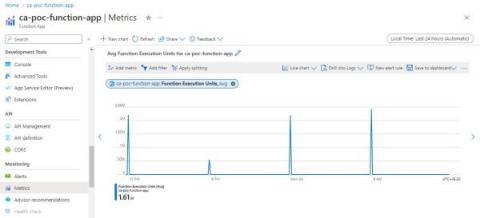
Introduction to Azure Storage Service Encryption

Microsoft Azure is a leading cloud service provider that offers a wide range of storage solutions. One of its essential features is the Azure Storage Service Encryption (SSE) which helps organizations protect their data at rest. This article will dive deep into the world of Azure Storage Service Encryption, discussing various encryption types, their applications, and best practices for implementing encryption in your Azure storage accounts.

Making Kubernetes Dev-Friendly with Komodor & Okteto

Kubernetes has become the software world’s infrastructure, leading to significant changes in application architecture and packaging. Despite the introduction of new technologies and practices, they have not kept pace with the rapid growth of the K8s ecosystem. As a result, developers who once solely focused on coding are now spending hours on operations, leading to a longer feedback loop during development. They’re expected to have an understanding of Kubernetes in order to do their jobs, causing a significant drop in productivity and leading to a poor dev experience.

Anomaly Detection Using OSquery and Grafana

Detecting unauthorized usage and malicious applications in an instance involves analyzing OS and application logs. Doing this manually is a herculean effort because of the number of logs and the patterns one has to look for. Having a tool that can provide an aggregated view of your instance and the ability to analyze them easily can greatly reduce manual effort.

The Guide to SRE Principles

Site reliability engineering (SRE) is a discipline in which automated software systems are built to manage the development operations (DevOps) of a product or service. In other words, SRE automates the functions of an operations team via software systems. The main purpose of SRE is to encourage the deployment and proper maintenance of large-scale systems.

Cloud vs. On-Premises Backup: Which Strategy Is Better?

If you’re a business or IT leader, you have got to be ready to face data loss incidents. Because here’s the deal — any data loss incident, whether caused by a cyberattack, human error or a natural disaster, has the potential to cripple your business. Not only could your company temporarily lose access to its mission-critical information leading to downtime, but it could also lose this data permanently.

Creating & Merging Pull Requests in VS Code

My name is Luca Del Puppo, I’m a FullStack Developer in Claranet It. I have been a software developer since 2013. I have a background in c# with.net framework, but lately, I’ve moved to Node and React. I’m working for a consulting company, and typically I try to use my experience to help customers to get rid of their problems, remove roadblocks, and achieve their business goals.

Issue breakdowns and drift details stoke software delivery

New in Sleuth for March 2023: See how issue breakdowns give you more visibility and show you the status of any issue referenced in your deployments. They're especially useful when looking at your work in progress so you can see what's in review, what's in progress, and what's being investigated. Plus, environment drift details provide visibility into the specific deploys, PRs, commits and issues that comprise the drift between any two environments. Less drift means fewer production issues.

The Future of Infrastructure Monitoring: Cutting-Edge Technologies IT Leaders Can't Ignore

Managing IT infrastructure can be tough, especially when you’re dealing with scattered data, unexpected downtime, and slow problem-solving. The key to overcoming these hurdles is adopting a user-friendly, all-in-one Infrastructure Performance Monitoring (IPM) solution. In this blog, let’s explore how a top-notch IPM system can change the way you handle your IT infrastructure and show you how a cutting-edge IPM platform can address these common issues.