Operations | Monitoring | ITSM | DevOps | Cloud

AI Is Reshaping the Tech Industry in 2026: What Consumers and Businesses Need to Know

Artificial intelligence has evolved from an emerging technology into one of the biggest drivers of innovation across the global technology industry. In 2026, AI is influencing everything from smartphones and laptops to cybersecurity, cloud computing, enterprise software, and digital productivity tools. Companies worldwide are investing heavily in AI powered products that improve efficiency, automate repetitive tasks, and deliver more personalized user experiences.

Shai-Hulud style attacks need more than scanning

Pre-install scripts mean a malicious package can compromise a developer's laptop the moment it's pulled – no build, no deploy, no install required. That breaks the old model where scanning catches a bad package after the fact, when it's already too late. The fix is active policy enforcement at the point of pull, using signals like package age, signed provenance, and maintainer trust to filter out malicious packages before they ever land.

Save the Address, Save the Cloud: A Hands-on KubeVirt Live Migration Workshop

In the previous post in this series, we covered why Virtual Machine (VM) Live Migration in Kubernetes is difficult: a VM’s IP is its identity, and the “new” VM on the destination node has to come up with the same IP, this something that Kubernetes is not known for, and on top of that, traffic has to switch over only after network security policies are in place.

Scaling Globally: Corporate Compliance for Tech Startups

Expanding your tech business into new markets brings massive growth opportunities. It requires careful management of international laws to avoid heavy fines. Smart founders prepare their framework early to stay ahead of global regulators. Managing these rules protects your business during international expansion.

Certificate deployments just got an easy mode

The old deployment flow expected a lot from you. You had to know what format your certificate needed to be in. You had to know where it should be stored on the target system. Then you had to review and customize a deployment script in a code editor before anything ran. It turns out most of you don’t want to do that. And fair enough, staring at a script editor when you just want a certificate on your Exchange server is a little intimidating.

Save the Address, Save the Cloud (KubeVirt VM Migration Story)

Kubernetes is built for containers, and it’s been doing that since it used to run docker as an engine for its containers. But what if you want to add VMs to the mix? After all, containers are ephemeral and don’t require fixed IPs as they shift the identity toward labels, but VMs on the other hand are tied to IP addresses and in some cases MAC addresses. This brings us to this blog about VM migration and IP preservation.

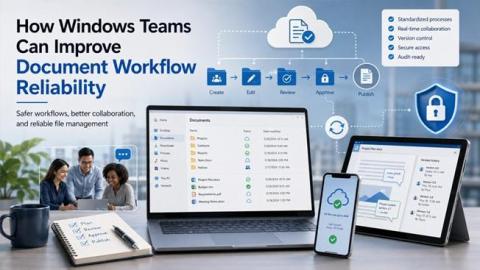
How Windows Teams Can Improve Document Workflow Reliability

For many organizations, documents are still at the center of daily work. Project plans, internal reports, client proposals, onboarding files, invoices, meeting notes, and compliance records often move between multiple people, devices, and departments before they are considered complete. When a team depends heavily on Windows devices, a reliable document workflow becomes more than a matter of convenience. It directly affects productivity, security, accountability, and operational continuity.
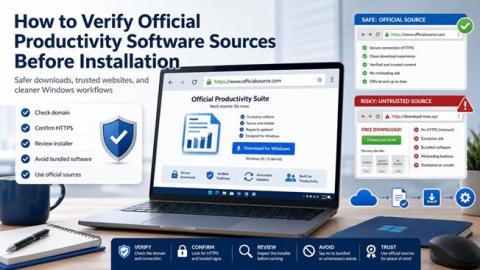
How to Verify Official Productivity Software Sources Before Installation

Productivity software is part of almost every modern workplace. Teams rely on document editors, spreadsheet tools, presentation software, PDF utilities, collaboration apps, and cloud-based platforms to complete daily work. Because these tools are so common, many users install them quickly without spending enough time checking where the installer came from.

How Small Businesses Can Meet Federal Cybersecurity Standards Without Breaking the Bank

Federal contractors face a stark reality: without proper cybersecurity controls, they risk losing access to government contracts worth billions of dollars annually. The Cybersecurity Maturity Model Certification (CMMC) framework has transformed from a voluntary best practice into a mandatory requirement, forcing small businesses to either adapt or exit the federal marketplace entirely.

How ID Card Printers Strengthen Security and Streamline Operations

Modern organizations face mounting pressure to secure facilities, protect sensitive data, and verify identities quickly. ID card printers have evolved from simple badge-making tools into sophisticated security infrastructure that integrates with access control systems, biometric authentication, and digital identity platforms.

Is your data truly yours? Why data sovereignty in India matters more than ever

As businesses in India embrace the cloud, a critical question looms: Where does your data really live, and who controls it? India's cloud market is estimated at USD 26.43 billion in 2026, growing at 21% annually with projections reaching USD 68.82 billion by 2031. This rapid expansion underscores the strategic importance of cloud infrastructure in the country, but with growth comes growing urgency.

How to scale access control in Grafana Cloud

One of the primary reasons organizations adopt Grafana Cloud is to create a single pane of glass across the data they collect from self-hosted systems, cloud providers, and third-party platforms. Bringing those signals together enables richer correlations, reduces tool sprawl, and makes it easier for teams to understand what's happening across their environment. But as observability grows and becomes more centralized, access management becomes more important.

One SSL certificate on multiple servers

Every certificate renewal automation tool has to answer one architecture question before it does anything else: where does the private key get generated? A reader who used to be “the certificate guy” at his organization emailed me this week to ask about exactly that: It’s the right instinct. It’s also how most automation tools work. Certbot generates the key on the server, builds a certificate signing request, and the private key never leaves the machine.

Beyond safety and security: Why automotive open source demands dependability

In the traditional automotive world, teams often work in silos: the cybersecurity experts lock down the ports, the quality assurance teams hunt for bugs, and the functional safety engineers track the ISO 26262 compliance. At Canonical, we believe this fragmented workflow causes friction rather than collaboration. You cannot have a safe vehicle that isn’t secure, and you cannot have a secure vehicle running on poor quality code. This friction results in a slow and rigid development process.

Building an open source chain of trust: new research uncovers key blockers and ways forward

Canonical is pleased to share its latest research report, “The open source chain of trust.” Based on a survey of 500 DevOps professionals, the report highlights how organizations approach their open source software supply chains. While many companies are moving toward verifiable provenance and automated security workflows, internal misalignment and disjointed approaches remain serious challenges for most teams. Read the report.

Why Strategic IT Planning Is Essential for Business Success

Technology now plays a central role in nearly every aspect of business operations. From communication and customer service to data management and workflow automation, organizations rely on digital systems to maintain efficiency and support growth. However, simply adopting new technologies is not enough. Businesses need a clear strategy that aligns technology investments with their long-term objectives.

Modern IT Infrastructure for Business Continuity, Security and Operational Efficiency

Modern organizations rely on IT infrastructure for almost every part of daily operations. Communication, customer service, accounting, data storage, remote work, application hosting and internal collaboration all depend on stable digital systems. When infrastructure is reliable, employees can work efficiently and customers experience fewer disruptions. When it is outdated or poorly managed, even small technical issues can quickly affect the entire business.

Modern Communication Tools for Personal Privacy and Family Connection

A student studying abroad wants to call home without paying international rates. A traveler needs a US number to receive verification codes for banking apps. A family scattered across three cities wants to video chat together on a Sunday evening. A freelancer needs a separate number for clients without giving out their personal line. These are everyday problems. And they affect millions of people, not just large companies. Two types of communication tools solve them: virtual phone numbers and video calling apps. Both are now SaaS products designed for individual users.

Physical Security and Environmental Control in Facilities Operations

A warehouse stores goods worth millions. A server room holds critical data. A clean room needs strict air control. Keeping these facilities secure and sealed is a core operational task. Facility operations cover two related areas: physical access control and environmental integrity. One controls who gets in. One controls what gets in. Both are essential for secure, efficient operations.

The Server-Room Weak Spots Hackers Count on You Ignoring

When people think about cybersecurity, they usually picture sophisticated malware, phishing emails, or hackers exploiting software vulnerabilities. In reality, many successful attacks begin with something much simpler: overlooked weaknesses inside the organization's own infrastructure. Server rooms, network closets, and IT equipment often receive less attention than cloud security, yet they remain some of the most valuable targets for attackers.

Icinga Web 2.14, Security Releases, and Module Updates

We are shipping a new batch of Icinga Web ecosystem releases today. Icinga Web 2.14 is the headline, bringing the baseline for two-factor authentication support, configurable password policies, a configurable Content Security Policy, and a round of developer tooling improvements that have been in the works for a while. Icinga Certificate Monitoring 1.4, Icinga Reporting 1.1, and Icinga PDF Export 0.13 join it with PHP 8.5 support across the board and a set of focused improvements for each module.

Six AI agent SDKs for enterprise Kubernetes, compared

There’s a question we hear constantly from platform and engineering leaders right now, “which agent SDK should we standardize on for our Kubernetes clusters?” The honest answer is that the question is slightly wrong, and the rest of this post explains why. But it’s a fair question, so let’s compare the contenders first.

You Can't Detect What You Never Collect: Telemetry Coverage in the Agentic SOC

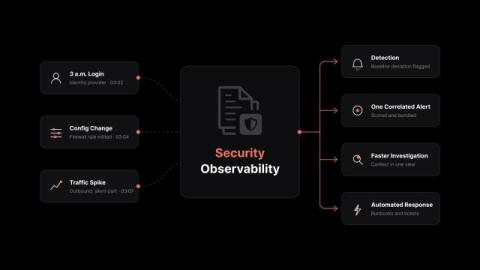
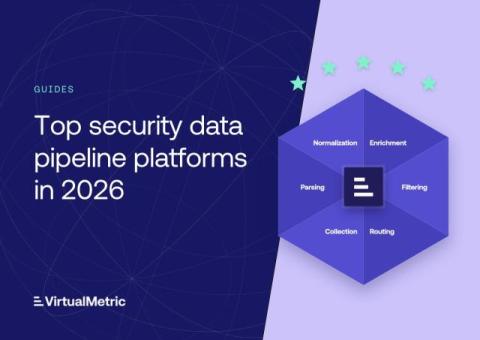
Every detection rule, every threat hunt, every AI agent you deploy rests on one silent assumption: that the data describing an attack actually reached your tools. When it doesn’t, nothing above it can save you, and no one gets an alert that the data was missing. Security teams invest heavily in the sharp end of the stack: detection content, threat intelligence, response playbooks, and increasingly, AI agents to triage and investigate at machine speed.

The golden path: security that works because it's the easy path

A golden path for dependency management isn't a policy document – it's a preconfigured private registry with upstream proxies covering every ecosystem your teams use, set as the default. Developers don't opt into security; they get it automatically by using the standard toolchain. The alternative is teams configuring their own controls, producing inconsistent postures and compounding risk across the org. If the secure path requires extra steps, developers will route around it. Make it the easiest option and the policy enforces itself.

Walkthrough: Puppet System Hardening Assessment

Is your infrastructure as secure as you think it is? In this walkthrough, see how aSystem Hardening Assessmenthelps organizations identify security gaps, uncover configuration risks, and prioritize remediation efforts across critical systems. You'll learn how teams can evaluate their environment against security best practices, gain visibility into potential vulnerabilities, and take actionable steps to strengthen their overall security posture.

How ITOps Can Automate Data Discovery for Rapid Privacy Request Fulfilment

For most organisations, managing data privacy compliance is traditionally viewed as a legal or governance function. However, when a Data Subject Access Request (DSAR) or Freedom of Information (FOI) application is submitted, the actual labour of retrieving that data falls squarely on IT operations. With the passing of the Privacy and Other Legislation Amendment Act 2024, Australian businesses are facing some of the most comprehensive federal privacy reforms in over a decade.

How Windows Teams Can Build Safer and More Reliable Document Workflows

In many organizations, document work still depends heavily on Windows devices. Teams create reports, edit spreadsheets, review presentations, exchange PDFs, and move files between desktops, laptops, shared drives, cloud folders, and mobile devices. Even when companies use modern collaboration platforms, the daily document workflow can still become messy if software choices, installation habits, file formats, and update processes are not managed carefully.

How Norsk Tipping uses feature flags to govern their deployments

Norsk Tipping is Norway’s state-owned gaming operator, running 2,500 to 3,000 production releases a year across iOS, Android, web and backend systems. Like every regulated organisation at scale, the platform team has to hold two things in tension: maintain strict deployment controls that stand up to audit, and keep the path to production open so that 100 engineers can ship safely.

Automating SonicWall Certificate Deployment with the SonicOS API

How do we keep our Sonicwall certificates up to date as certificate lifetimes get shorter? We’re already at 200 day certs with 100 then 47 day certificates coming soon. A certificate you used to touch once every year now needs replacing up to twelve times a year. Doing this by hand is out of the question, no one has the time. Even if they did, the frequent updates is just asking for mistakes. Luckily, this can be automated using the SonicOS API.