
Operations | Monitoring | ITSM | DevOps | Cloud

Why Every Modern Security Operation Center Needs Automation and AI

Security teams no longer face a simple monitoring problem. In most cases, they face - While cloud workloads change by the minute, identities move across applications. In general, endpoints appear outside the traditional perimeter. Meanwhile, the modern security operations center must interpret all that activity. It must also not let a genuine threat disappear inside routine noise. Although traditional processes still matter, manual triage cannot carry the entire workload anymore. In fact, analysts lose valuable investigation time if they -

Tier 1 SOC Automation Options Explained

In 2026, like in every other year, tier 1 is the front line of the SOC. It's where alerts land, where triage happens, and where most of the repetitive work lives. Unsurprisingly, it is also where automation is moving fastest. There is a lot of skepticism around how much of tier 1 can be reliably automated. If you want to see some, just have a look on Reddit or other forums. But there is definitely a growing market and capability for AI-enabled tools to learn, guide and automate tier 1 workflows.

5 Best SOC 2 Continuous Monitoring Tools for SaaS: Closing the 20% Manual Evidence Gap

Landing a big-logo customer feels great-until their security questionnaire hits your inbox. For most B2B SaaS teams, SOC 2 compliance is the roadblock. You connect a tool, dashboards turn green, and then stall: about 20% of evidence still needs screenshots, sign-offs, or frantic Slack chases. That last-mile grind drags engineers back into spreadsheets just when the audit seems done.

Modern Phishing Is Slipping Past SOCs. Here's How to Stop It Early

Most phishing attacks today do not look dangerous at first. They use trusted platforms, familiar login pages, and encrypted traffic that appears completely normal to security tools. For SOCs, that creates a serious operational problem: the team may see something suspicious, but confirming real risk often takes too long, giving attackers time to steal credentials and move into business-critical systems.

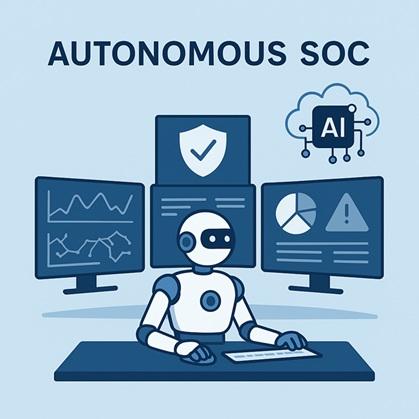
Autonomous SOC: Moving Toward Self-Driving Security Operations

The idea of a fully autonomous security operations center (SOC) sparks fascination and skepticism in equal measure. Swimlane defines an autonomous SOC as a center that uses AI, machine learning and automation to handle a significant portion of security tasks, including threat detection, triage and even remediation, with minimal human intervention. The goal is to free analysts from repetitive tasks so they can focus on strategy and threat hunting. Although a completely selfdriving SOC remains aspirational, advances in hyperautomation, enterprise automation architectures and AI agents are bringing us closer.

5 SOC Challenges You Can Eliminate with a Single Improvement

Overcoming these five challenges commonly faced by SOC teams means taking a quantum leap in performance. The catalyst for this shift is simple: high-quality threat intelligence, an essential component for modern security experts. With accurate, real-time data on malicious indicators, organization can match - or even surpass - results reported by ANY.RUN 's clients who adopted TI solutions: High-quality threat intelligence drives such improvements by solving some of the hardest SOC challenges. Read further to see what they are and how TI helps overcome them.

Security vs. ops: the two sides of reliability

Security and ops work together to keep your systems reliable, but why do we treat them so differently? Reliability results start when you proactively take charge of your infrastructure and application risks. Transcript: When we talk about reliability in the software space and the digital operations space, you really end up falling into these two different mindsets.

How Top SOCs Automate Detection of Evasive Phishing Attacks

Phishing is no longer sloppy or easy to spot. Modern attacks are clean, targeted, and sold as full-service phishing kits. They mimic trusted brands, use CAPTCHAs to block scanners, and quietly steal credentials behind polished, convincing pages. For SOC teams, this creates a serious problem. Traditional detection methods often miss these threats entirely, until the real damage is done. But leading SOCs have found a way to fight back.