Operations | Monitoring | ITSM | DevOps | Cloud

AI Is Reshaping the Tech Industry in 2026: What Consumers and Businesses Need to Know

Artificial intelligence has evolved from an emerging technology into one of the biggest drivers of innovation across the global technology industry. In 2026, AI is influencing everything from smartphones and laptops to cybersecurity, cloud computing, enterprise software, and digital productivity tools. Companies worldwide are investing heavily in AI powered products that improve efficiency, automate repetitive tasks, and deliver more personalized user experiences.

Upgrade Your AWS Deploy Orb to Get Deploy Markers

Upgrade to the latest version of your AWS deploy orb to get automatic registration of deploy markers. This will give you instant access to deployment timeline, auto-rollback, and version comparison when something breaks — for about five minutes of effort. It will also switch you to OIDC, so there are no long-lived keys to manage. It’s a single version bump. Here’s how.

Why features pass QA and still break in production

Database migrations are where the mock data problem shows up most clearly. A migration that adds an index to a table with 500 rows in the development database runs in milliseconds and passes every test. The same migration against a production table with 8 million rows locks the table for 90 seconds during peak traffic. Nobody saw it coming because nobody tested it against 8 million rows. This isn't an edge case.

Application monitoring tools in 2026: APM, observability, and AI monitoring compared

Application monitoring tools track your application's health, speed, errors, and resource usage in real time. Also called APM tools or application performance monitoring software, these tools are essential for any team running production workloads. The leading options in 2026 are Datadog, New Relic, Dynatrace, Grafana, and Elastic APM for traditional workloads, plus Arize AI, LangSmith, and Weights & Biases for AI observability.

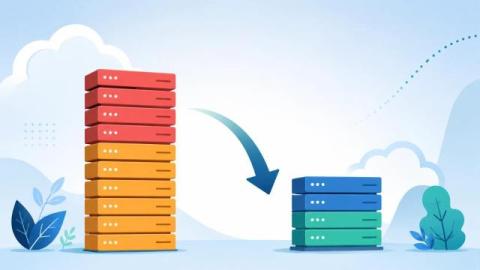
Why cloud repatriation is happening now

Cloud first was gospel for a decade. But the calculus has changed, and organisations are asking harder questions about where their workloads actually belong. In this clip, Civo Product Director Russ Smith breaks down the four forces that have converged to shift the default: spiralling bills that are no longer defensible at scale, the Broadcom acquisition that detonated VMware pricing overnight, sovereignty becoming a boardroom procurement requirement, and AI making new hardware brutally expensive.

Why UK Businesses are Shifting Away From the Public Cloud Cost Model

Over the past five years, one of the most consistently tracked figures in the UK business technology sector has been the flight from public cloud. Barclays' 2021 CIO survey revealed that 43% of enterprises plan to shift workloads away from public cloud. By 2024, that had grown to 83%.

Deployment strategies explained: types, trade-offs, and what each one actually costs

A deployment strategy is the method an engineering team uses to release new software to production. The six core deployment strategies are recreate (big bang), rolling update, blue-green, canary, A/B testing, and shadow deployment. Each trades off between downtime risk, rollback speed, infrastructure cost, and complexity. This guide covers all six along with what each strategy actually costs in cloud and AI infrastructure spend.

What is digital transformation and why it is important?

A digital transformation can help a business thrive. Developing a strong technology stack that works for your business is essential for growth. Investing in a digital transformation means finding what works for your business and ensuring the best operations through your digital tools.

Why individual AI adoption is breaking team-level throughput

There is a question a lot of engineering leaders are quietly sitting with right now: we have rolled out AI tools across the team, the developers seem faster, so why isn't more software actually shipping? It is a reasonable thing to consider. Pull requests are opening faster. Lines of code per sprint are up. The boilerplate that used to take full afternoons now takes minutes. By every local measure, the investment is paying off.

Amit explains AO

Most enterprises have observability tools. What they often lack is a shared view between application and infrastructure teams. When application performance degrades, finding the root cause can be slow because the data lives in separate silos. Virtana brings application observability and infrastructure intelligence together in a single platform, helping teams identify issues faster, collaborate more effectively, and shift from reactive troubleshooting to proactive operations.

GitHub Copilot cost: what teams actually pay in 2026

The GitHub Copilot cost runs from $0 for the Free tier to $10/month for Pro, $39/month for Pro+, and $100/month for Max. Teams pay $19/user/month for Business and $39/user/month for Enterprise. The twist: on June 1, 2026 GitHub swapped fixed premium requests for usage-based AI Credits, so what those flat fees actually buy now depends on how hard you push the AI. The sticker price is the easy part. The part that ambushes finance is everything stacked on top of it.

How to patch 40 Drupal sites without 40 manual deployments

Standardizing the fleet: automated updates for multi-site management There's a specific kind of update that Drupal agencies and enterprise teams dread: a security release in something the whole fleet runs on, the PHP runtime, the database engine, or a shared service, with a patched version available now and a deadline attached. For a team managing a single site, moving to the patched version is an afternoon of work.

Build Custom Field Templates for Application Assessments

Modernization assessments move faster when the structure is already in place. Instead of recreating custom fields, interview questions, and assessment workflows for every customer, you can use a custom field template to standardize how data is collected from the start. This guide shows you how to create a reusable Tidal Accelerator custom field template using Node.js and the Tidal API, so your assessments are easier to repeat, compare, and scale. So you’re starting a modernization practice.

From Prototype to Production With AWS AgentCore

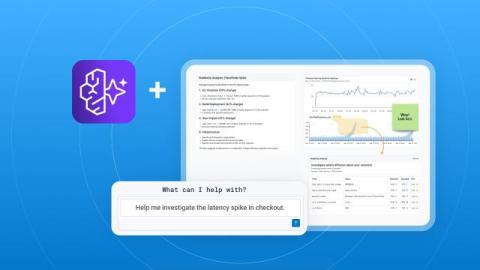
"Hello world, this is your agent speaking!" The agent loop! The LLM is calling tools, the answers are sensible, and the sky's the limit. Now, as you look forward to production, you look for a composable toolset, something that can grow with your use case and system needs. That's what we created with Honeycomb Canvas: a collaborative investigation space where AI agents help you understand, fix, and learn about your system.

GPT-4 API cost 2026: pricing breakdown and how to estimate it

GPT-4 API pricing spans $0.10 to $30.00 per million input tokens across the model family. GPT-4.1 is the current recommended production model at $2.00 input / $8.00 output per million tokens. Legacy GPT-4 still runs at $30.00/$60.00 per million tokens -- 15x more expensive for no meaningful quality gain. For finance and engineering leaders accountable for AI spend, choosing the right GPT-4 variant is the single biggest cost lever on your bill.

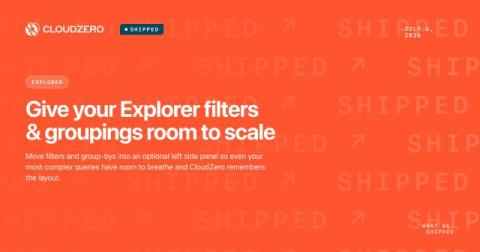
Shipped: Give your Explorer filters & groupings room to scale

The controls at the top of Explorer are great for a simple question. But as your query grows with more group-bys or a stack of filters, those controls start eating into the vertical space you actually want for your data. Now you have the option to move filters and groupings into a dedicated left side panel, so a complex query has room to scale cleanly. Set it once and CloudZero keeps it that way.

Modern IT Infrastructure for Business Continuity, Security and Operational Efficiency

Modern organizations rely on IT infrastructure for almost every part of daily operations. Communication, customer service, accounting, data storage, remote work, application hosting and internal collaboration all depend on stable digital systems. When infrastructure is reliable, employees can work efficiently and customers experience fewer disruptions. When it is outdated or poorly managed, even small technical issues can quickly affect the entire business.

How to Consolidate Your Azure & Multi-Cloud Monitoring and Avoid Tool Sprawl

This is the eighth blog in our Azure Monitoring series, where we look at a challenge many organizations face as Azure and multi-cloud environments expand: monitoring tool sprawl. What starts as a few monitoring solutions for different needs can turn into disconnected dashboards, duplicate alerts, and fragmented visibility.

The entire cloud stack is just pizza and we can't unsee it

The acronym soup is the universal IT rite of passage. So we explained the whole stack with the one thing everyone already understands: pizza. From making the dough yourself to just opening the box, there’s a version for every level of “how much do you actually want to manage.” Alexis can give the full breakdown in the time it takes to decide what you'll order.

9 Best Azure Monitoring Tools Compared for 2026

When an Azure service slows down or stops responding, you often hear about it from a user before your monitoring says a word. It only gets harder as you scale: Azure now runs about a fifth of the world's cloud workloads (Statista, 2026), and every new service is one more place a failure can hide. By the end, you will have a shortlist for your stack. You will also know which tools to skip, without sitting through nine sales demos to find out.

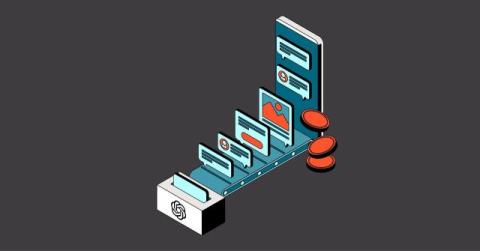
OpenAI API cost calculator: estimate your GPT spend before it estimates you

This OpenAI API cost calculator (also an AI inference calculator for o3/o4-mini thinking tokens) estimates your monthly OpenAI API pricing bill from three inputs: model, request volume, and average tokens per request. Toggle between standard, batch, and cached pricing and get your number in seconds. It also shows what the same workload costs on Claude and Gemini. For the full per-model rate card, see CloudZero's OpenAI API pricing guide.

Shipped: The Fastly spend that was hiding in plain sight

CDN and edge spend is easy to lose track of. Fastly bills on its own, off to the side of your cloud invoice – real money, often significant, sitting where none of your cost tooling reaches. So it stays its own island: a lump sum with no easy way to tie it back to the teams, products, and customers driving the traffic.

AI Summary Agent in Turbo360

Handed over an Azure integration environment you've never seen before? Turbo360's AI Resource Summary agent gives any support operator or engineer an instant plain-English overview of what a resource is, how it behaves, and what to watch out for - without needing to ask the developers. In this demo: Great for: IT operations teams, MSP NOCs, cloud support engineers, and anyone responsible for running integration workloads they didn't build.

Why compliance audits keep slowing your engineering team down

If you've shipped software in fintech, healthcare, or government, you probably know the specific dread of an upcoming compliance audit. Not because the software isn't secure, but because proving it is requires reconstructing a paper trail for decisions that were made in Jira tickets, Slack threads, and pull request comments over the last six months. The software is fine. The documentation of the software is the problem.

Cloud repatriation strategies: From public dependency to hybrid flexibility

For years, "move everything to the cloud" was the default. But the economics have shifted. Join Russell Smith to explore why enterprises are reconsidering their cloud strategies, and how modern private cloud platforms are changing the game. We'll cover the real costs of public cloud lock-in, achieving feature parity without the price premium, and how to navigate today's hardware constraints, especially if you've got existing infrastructure assets that can still deliver value.
Don't 'control' your AI spend. Understand it and be intentional.
There’s a good interview making the rounds. BizTech sat down with IBM’s James Stevenson to talk about how financial institutions can get a handle on cloud and AI costs. The advice is solid: get visibility, kill idle resources, tighten governance, tag everything. And pull finance and engineering into the same room. I don’t disagree with it. But I read the whole piece and noticed where the gravity pulls: control costs, reduce waste, bring down spend. The headline says it (‘Q&A.

Shipped: Turn your Bifrost gateway into an AI spend meter

If you route model traffic through Bifrost, you already have the hard part: one place every AI call passes through, where the model, the tokens, and the cost are visible on the way past. It’s the cheapest spot in your stack to measure AI spend. What’s missing is everything downstream – today that usage only becomes “spend” weeks later, when the provider invoice lands as a lump sum you can’t break apart.

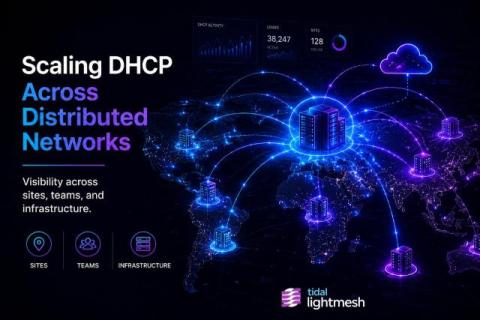
Managing DHCP Across Distributed Networks

Managing DHCP across distributed networks gets messy fast. Lease activity changes constantly. Naming conventions drift. Infrastructure changes happen independently across locations. Before long, your team no longer has a complete view of what’s happening across the network. What started as a straightforward service becomes a records problem with real operational consequences.

Sovereign cloud for financial services: Meeting FCA and PRA requirements with UK infrastructure

Financial services in the UK operates under one of the most demanding regulatory frameworks in the world. The FCA and PRA between them set expectations for operational resilience, outsourcing, data governance, and concentration risk that shape every infrastructure decision a regulated firm makes. Cloud adoption in the sector has happened, but it's happened under regulatory scrutiny that's grown steadily more pointed over the last several years.