Mailchimp
Not subscribed to OpsMatters Newsletter


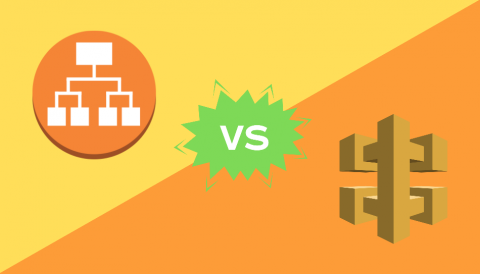
We recently wrote about whether API Gateway can act as a Load Balancer. The answer is yes and, in many cases, they are substitutes for each other. But how should we choose which one to use? In this article, we will dive into more details on how these two types of HTTP networking services compare, using the AWS services as a base level: API Gateway and Application Load Balancer (ALB). Both are highly-scalable services to a point that scalability should not be a concern for most use cases.
Alert management is no longer a manageable task, given the growth in applications, cloud environments and point monitoring tools. Too much time is spent filtering and making sense of alert data and determining where to route incidents. All of these steps slow down critical issue identification and resolution. In this article, I want to discuss a more sensible, modern way to deal with IT alerts, through machine learning intelligence and automation.
It’s probably true to say that if you asked an average user what makes a great web application, they’d probably say “speed.” But speed is the probably the least important aspect of an extensive rundown of elements. Factors like application development and rendering in the program are probably higher on that list. And what makes up a great performing application? And when something goes wrong, how do you know?
Security is vital for protecting company assets and data subjects. Evolving data protection regulations, like the General Data Protection Regulation (GDPR) and the California Consumer Privacy Act (CCPA), have thrown light on security breaches and the security architecture of those compromised. In 2019, the global average cost for a data breach was $3.9 million, not including reputational damage and hidden costs.
I wanted to better understand how COVID-19 has been developing in South America. As I’ve recently started playing with InfluxDB, the open source time series database, I created a dashboard of cases and deaths using InfluxData’s platform. I usually use InfluxDB, Chronograf, Grafana, Zabbix and other similar solutions to monitor services and systems. However, until this point, I hadn’t used them to process and visualize other kinds of data.
Is it the middle of Spring already? (And Fall, for our Southern Hemisphere readers!) A lot has happened at Splunk since our last developer updates at .conf19. In case you missed any of the great developer sessions there, grab some time to watch what you missed!
In May 2019, Bloomberg Government reported that Federal agencies planned to move 272 information technology programs to the cloud in FY2020. Fast forward to April 2020 — they reported that there are more than 1,800 federal IT programs that are either migrating or considering migrating to the cloud in fiscal 2021, signifying a rapid increase in cloud adoption in the federal government. How might COVID-19 affect this explosive increase in cloud interest?