Mailchimp
Not subscribed to OpsMatters Newsletter


Reliability impacts every organization, whether you plan for it or not. Leading companies take matters into their own hands and get ahead of incidents by building reliability programs. But since many of these programs are still nascent, how do you know what good looks like? Of course, the right tools and technology that can enable your team to uncover reliability risks before they impact users play an important role. But improving reliability goes beyond technology.
When it comes to managing your database, monitoring is crucial for maintaining data integrity, optimizing performance, and ensuring efficient resource allocation. In today's fast-paced technological landscape, having real-time insights into your database's health is more important than ever. This is where Heroku Postgres and Hosted Graphite come into the picture.
Printers play a crucial role in various industries, helping businesses efficiently manage their document workflows. However, ensuring optimal printer performance and minimizing downtime can be a challenge. This is where hosted graphite comes into the picture. Hosted graphite is a powerful monitoring tool that allows businesses to graph metrics and gain valuable insights into their printer systems.
In the realm of IT infrastructure monitoring, Nagios has long been a popular choice due to its robust feature set and flexibility. However, even reliable systems can encounter issues, and one recurring problem that Nagios users might encounter is the "Return code of x is out of bounds" error. In this blog post, we'll dive into the details of this error, what causes it, and how it can impact your monitoring efforts.
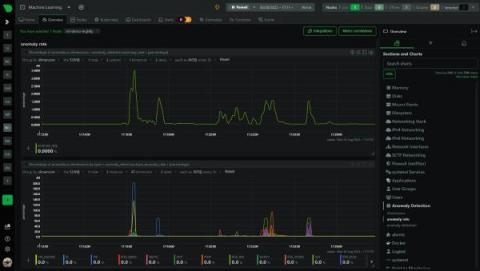
We have recently added a more detailed anomaly rate chart to Netdata that breaks out the overall node anomaly rate by type, this lets you more easily see what parts of your infrastructure might be experiencing an uptick in anomalies when you see the overall node anomaly rate increase.
Containers and microservices have revolutionized the way applications are deployed on the cloud. Since its launch in 2014, Kubernetes has become a de-facto standard as a container orchestration tool. With traditional approaches of deploying applications in production, developers often release updates or new features all at once, which can lead to issues if there are bugs or other issues that weren’t caught during testing.
In the dynamic realm of embedded systems, the right combination of hardware and software components can transform the development process and empower engineers to build robust and efficient solutions. This article explores a streamlined device-to-cloud embedded design utilizing the STM32G0 Nucleo board from STMicroelectronics, an AWS IoT ExpressLink module from Espressif, AWS IoT Core for secure MQTT communication, and Memfault for remote debugging.
The colocation data center is a type of service where organizations can rent out space in a data center facility to house their IT infrastructure. These facilities provide the power, cooling, and network connectivity that companies require to operate their servers, storage devices, and applications. Colocation services allow companies to reduce costs and avoid the hassle of building and maintaining their data center facilities.