Operations | Monitoring | ITSM | DevOps | Cloud

Best Practices to Minimize Website Downtime

When a customer notifies you that your website is down, it has far more severe consequences than just embarrassment. Website downtime can mean loss of money, reputation, credibility and in a lot of cases, the overall feeling of security of your customers. As a survey report from Gartner showed website downtime can cost nearly $5,600 per minute to some companies. So, what are the issues that can cause website downtime, and how can you prevent it?


The evolving application lifecycle: from DevOps to DevSecOps

Every evolution in technology starts with the people behind it. So understanding the context, roles, and objectives that gave rise to DevOps — and now DevSecOps — isn’t just an exploration of timing and technology; it’s central to how we define organizational success. In this post, I’ll recap a conversation I had with Gareth Rushgrove, Director of Product Management at Snyk, a cybersecurity platform that helps developers identify vulnerabilities in their applications.

Contributing Third Party Flux Packages: A Discord Endpoint Flux Function

Are you currently using Flux with InfluxDB? Have you written a great Flux function that would be useful to the community? If the answers to these questions are “Yes!”, then I encourage you to contribute your awesome work to Flux, so that others can appreciate you and your work. Today, we’re sharing how you can contribute a custom Flux function in a Third Party Flux Package.

The right way to track technician performance

Amid concerns of resource scarcity and increasingly complex resolution processes, service desks are constantly under pressure to deliver more with less. This, in effect, forces service desk managers to drive technicians to resolve requests faster, leading to an unhealthy obsession with numbers. Several service desks are known to regard the number of requests closed by technicians as a good yardstick for their performance.

Monitor RethinkDB with Datadog

RethinkDB is a document-oriented database that enables clients to listen for updates in real time using streams called changefeeds. RethinkDB was built for easy sharding and replication, and its query language integrates with popular programming languages, with no need for clients to parse commands from strings. The open source project began in 2012, and joined the Linux Foundation in 2017.

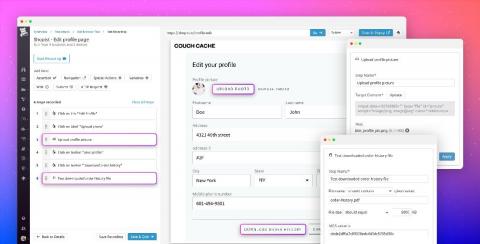
Test file uploads and downloads with Datadog Browser Tests

Understanding how your users experience your application is critical—downtime, broken features, and slow page loads can lead to customer churn and lost revenue. Last year, we introduced Datadog Browser Tests, which enable you to simulate key user journeys and validate that users are able to complete business-critical transactions.

Connecting the dots with Event Correlation

We can’t stress enough on the importance of event correlation in network monitoring. Our customers love correlation! For the love of event correlation we’ve published a blog on why modern organizations rely on event correlation. This is the second blog from the correlation series. You might want to read our previous blog before reading this one.

Through the crisis: ABN AMRO #1

Our ‘Through the Crisis’ series shares customers’ IT challenges and successes from the COVID-19 quarantine and remote work surge. Here, Jelmer Berendsen (Enablement Lead, Digital Workplace, ABN AMRO) explains how ABN AMRO’s companywide Engage surveys came to be of as much interest to board members as they were to the Digital Workplace team.

Through the crisis: ABN AMRO #2

Our Through the Crisis series shares customers’ IT challenges and successes from the COVID-19 crisis. Here, in our second instalment from ABN AMRO, Daan Tuijnman (Product Owner, Digital Workplace, ABN AMRO) details a number of Nexthink-facilitated use cases that helped their employees enjoy a superior remote work experience throughout the quarantine.