Operations | Monitoring | ITSM | DevOps | Cloud

Network Traffic Capture with Network TAPs

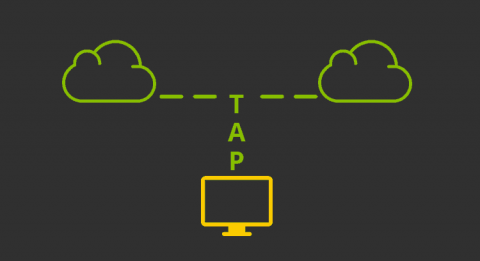
Network TAP (Terminal Access Point or Test Access Point) is the most common hardware device used for network traffic capture purpose. A Network TAP is basically a hardware designed to access the traffic between two network nodes and mirror it into a monitor port where we can connect a third party Analysis tool to listen.


Why Whitelist An Email Address?

TLDR; "If you expect to receive important emails from a trusted email address it is worth whitelisting the address to make sure that emails won't be accidentally blocked by an overzealous email client." Whatever email client you use, be it Gmail or Thunderbird, Outlook or Apple Mail, you can be sure that it comes with some kind of spam management built in. Most of the time this works well - legitimate emails are delivered to your inbox and spam is either rejected or gets funnelled to your spambox.

Announcing Tessen, the Sensu call-home service

As a monitoring company, it’s only natural that we’d always seek more data to inform our product decisions. With that in mind, we created Tessen, a hosted Sensu call-home service. Tessen is opt-in for the current version of Sensu, but will be opt out in Sensu Go (ICYMI, here’s our product roadmap, including the GA release date). Here’s what you need to know, including what we’re collecting and how that data benefits the Sensu Community.

Why you should market your status page like you market your product

As Symantec’s Principal ITSM Solutions Engineer, I was tasked 2 years ago with finding a way to quickly and effectively communicate incidents with our customers after a 4-day outage left our customers in the dark. I found Statuspage and knew it was the right tool for the job, offering a single place to send real-time updates to our customers across various channels (email, SMS, Twitter, etc.)

Jira Service Desk asset management integrations for cloud are here

The job of the IT professional has become more difficult over the past decade. This is not necessarily due to the workload, but because of the dramatic shift we’ve seen in the way our organizations, employees, and customers are now operating in a software-powered world.

Packets per Second in EC2 vs Amazon's Published Network Performance

First, let me say that I know AWS doesn’t promise anything about network performance as it relates to packets. At best, they leave it as a multivariate calculus problem for the reader — inclusive of CPU performance, code optimization, MTU, and current network congestion under the VLANs. But still, I was curious to see if there was any correlation to Amazon’s published “Network Performance” and the actual packets per second metric I tested.

Configuring a Build Pipeline on Azure DevOps for an ASP.NET Core API

Joao Grassi — a .NET developer, front-end hobbyist, and friend of Sentry — likes .NET very much and recently tried to bring a friend to the “dark side” of .NET development. To win a point, he decided to create a small sample project using Azure DevOps. As he started, he struggled to find helpful information in the documentation (like how to control the artifact name).

BOO! Does Network Management Give You the Shivers?

Just like the goblins, ghouls, and ghosts that’ll be walking down your street tomorrow night, network management can be scary. If you’re not a network expert (and don’t have one on your payroll), it can be intimidating to make changes to clients’ infrastructure for fear of taking the network down. Small actions can have a big impact.

How to Triage Test Failures in a Continuous Delivery Lifecycle

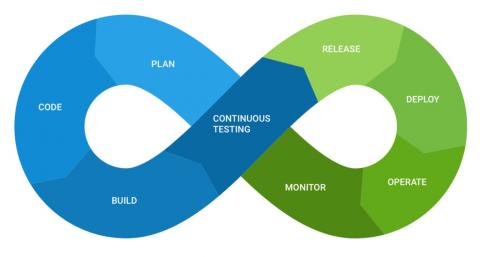
Continuous testing has evolved to become an important phase in modern application development and delivery. When we at Sumo Logic sketched out a plan to start delivering our microservices continuously, we knew we needed to define a delivery pipeline, which would run our automated tests and provide feedback in early phases of development.