Operations | Monitoring | ITSM | DevOps | Cloud

OpsRamp Summer 2019 Release: Faster Situational Awareness with Proactive AIOps and Better Customer Experiences with Cloud Native Monitoring

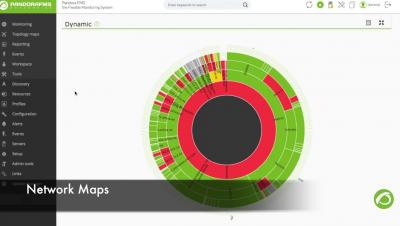
The OpsRamp Summer 2019 release delivers comprehensive features for modern infrastructure management with intelligent hybrid monitoring and contextual event correlation. The new release delivers AIOps innovations such as OpsQ Observed Mode and auto-alert suppression management along with enhanced network topology maps and new cloud native monitoring capabilities.
Auvik Use Case: Keep Clients Up to Date on the Value You're Providing

“What have you done for me lately?” It’s an honest question that doesn’t always have an easy answer. Fact is, you’re doing a lot of proactive work behind-the-scenes to prevent network disruptions and unnecessary downtime. But if you’re not heroically putting out fires in front of your clients, they might think they’re paying you for nothing.

When to Scale Up in RDS: 7 Critical Metrics

RDS is Amazon's managed relational database service. While RDS manages your databases maintenance, uptime and upgrade it is your responsibility to determine the cluster's scale and capacity. So the big question is when do you need to scale up? To answer this question you should understand and monitor seven metrics for each server in your cluster. They are: Database connections, Freeable memory, CPU credit balance, Free local storage, Replica lag, Commit latency, Select latency

Introducing Distributed Tracing with Zipkin with Logz.io

Distributed tracing has become a de-facto standard for monitoring distributed architectures, helping engineers to pinpoint errors and identify performance bottlenecks. Zipkin is one of the popular open source “tracers” available in the market, and I’m now happy to inform our users that we’ve recently introduced a new integration that allows users to easily ship trace data collected by Zipkin to Logz.io!

How PostgreSQL and Grafana Can Improve Monitoring Together

TimescaleDB is an open source database packaged as a Postgres extension that supports time series, but “it looks as if it were just Postgres,” said Timescale’s Head of Product, Diana Hsieh. “So you can actually use the entire ecosystem. You can use all of the functions that are enabled in Postgres – like JSON indexes, relational tables, post JSON – and they all work with Timescale.”