In today’s post, we will be covering the Elixir library named Broadway. This library is maintained by the kind folks at Plataformatec and allows us to create highly concurrent data processing pipelines with relative ease. After an overview of how Broadway works and when to use it, we’ll dive into a sample project where we’ll leverage Broadway to fetch temperature data from https://openweathermap.org/ in order to find the coldest city on earth.
Organizations are rapidly moving more and more mission-critical applications to Kubernetes (K8s) and the cloud to reduce costs, achieve faster deployment times, and improve operational efficiencies, but are struggling to achieve a strong security posture because of their inability to apply conventional security practices in the cloud environment. Commitment to cloud security grows, but security safeguards are not keeping up with the increased use of the various cloud platforms.
In recent weeks, some of the most recognizable companies in the DevOps space have had their foundations rattled, perhaps shaking developer confidence. The acquisition of Docker Enterprise by Mirantis, the acquisition of Sonatype (Nexus) by a capital firm and the open-sourcing of Quay by Red Hat leave many development shops wondering what will happen next with their strategic tool choices.
Most people, when they think about Software Asset Management (SAM) (and, let’s be honest, most people try to avoid thinking about it at all), they think about minimizing disruption and cost of audits and ensuring that the organization remains in a compliant state to avoid heavy fines from their vendors. To be fair to these people, that is what a large part of SAM is—ensuring that the organization is paying appropriately for the products they use to avoid costly audits or legal battles.
But does this mean that Pandora FMS is also into Lynis security? Well, its specialty is different… but yes, of course, it reaches everything covered by monitoring. In fact, flexibility is inherent to its name: FMS means Flexible Monitoring System and it is a tool with which you can save yourself many headaches, as well as tailor it to your needs!
When we introduced Secondary Storage two years ago, it was a deliberate compromise between economy and performance. Compared to Honeycomb’s primary NVMe storage attached to dedicated servers, secondary storage let customers keep more data for less money. They could query over longer time ranges, but with a substantial performance penalty; queries which used secondary storage took many times longer to run than those which didn’t.
With the addition of new data structures in Lucene 6.0, the Elasticsearch 5.0 release delivered massive indexing and search performance improvements for one-dimension numeric, date, and IP fields, and two-dimension (lat, lon) geo_point fields. Building on this work, the Elasticsearch 6.0 release further improved usability and simplicity of the geo_point API by setting the default indexing structure to the new block k-d tree (BKD) and removing all support for legacy prefix tree encoding.
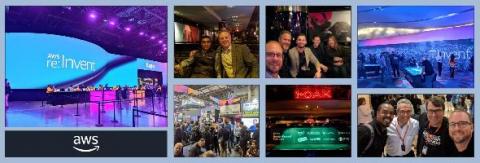
The 2019 AWS annual user conference, re:Invent, didn’t disappoint, with several intriguing announcements from the cloud giant. There was ample focus on Compute, with AWS Outposts and the new Graviton computing instances incorporating the ARM processing framework. There was also a renewed focus on AI and machine learning, as one would expect. Here’s my take on what this year’s show means for people working in IT operations and DevOps: