Operations | Monitoring | ITSM | DevOps | Cloud

Azure Database Security: 7 Best Practices You Need to Know

Azure is a cloud computing vendor, ranked among the top providers. Like all cloud vendors, Azure uses a shared responsibility model. This means that some of the responsibilities are taken care of by the cloud vendor, while the rest should be taken care of by the cloud user. In this article, you will learn about Azure SQL services, and the seven most important best practices needed to ensure the security of your cloud-based Azure SQL operations.

Virtualize the NOC: Accelerate Your Transition to Remote IT Ops with AIOps

The sudden shift to remote work caused by the global pandemic has forced IT Ops pros to quickly adjust in multiple ways to maintain the uptime and stability of critical digital services. Amidst this crisis, AIOps has emerged as a lifeline, as it facilitates remote collaboration, streamlines incident management, and accelerates detection and resolution.

An IT Operations Exec Discusses DevOps Collaboration, AIOps Trends

Donnie Berkholz is a VP of IT Service Delivery and comments frequently on trends in IT infrastructure in his newsletter. We talked to Donnie about his typical day on the job, his initiatives in self-service platforms and product management and his take on top infrastructure management trends such as AIOps and Kubernetes.

COVID-19 Guide for Security Professionals

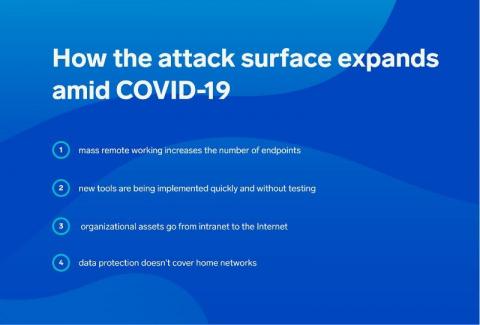
What a world! In February, everyone was busy minding their own business, but since March, the entire globe suddenly focused on the same challenge. The COVID-19 pandemic has taken our businesses and private lives by storm. The outbreak surprised everyone - a surprise hardly any business was prepared for. It brought country-wide lockdowns for quarantine, office closures and enforced teleworking, which are now commonplace.

Top 5 security challenges with Zoom video conferencing

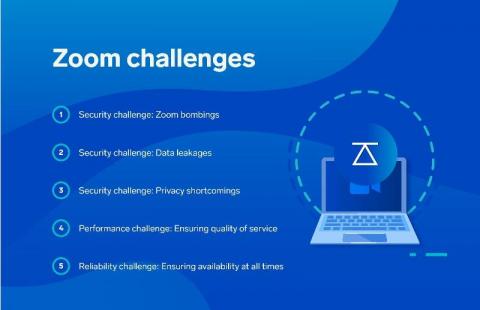
In times when a majority of employees are working from home due to the global coronavirus pandemic, enterprises are extensively relying on collaboration tools like Zoom to keep their employees productive and engaged. Only in March, the daily usage of Zoom Videos increased over 5 times. The platform made it easy for company employees and clients to hop on meetings whenever needed and for schools and students to continue education online.

7 Remote Work Problems IT is Solving With Nexthink

The past several weeks have been anything but normal, especially for those in enterprise IT. Though every company is facing their own unique challenges, we have noticed that certain technical use cases come up over and over again with our customers. After two months, and hundreds of use cases, we’ve picked the top remote work problems that enterprise IT departments are solving with Nexthink.

Your Last Local IP Address, Giving Context to IT's Remote Worker Data

With millions of employees recently making the jump to remote work, some IT departments are finding themselves on unfamiliar ground, and with newfound stress and pressure. The stakes seem higher now. IT cannot visit an employee’s desk or stop them in the hallway whenever they encounter an issue, they now have to solve problems proactively and remotely. But for some companies, the switch to remote work has been smooth and painless.

An adventure through the Snap Store

An application store with a large number of entries is a double-edged sword. It’s often a good sign of a vibrant, thriving community of software creators, developers and users working together. But then, people new to the ecosystem may struggle finding relevant content right away. The Snap Store currently offers about 7,000 applications, so exploration and discovery can take quite a bit of time and effort.

CIS hardened Ubuntu: cyber attack and malware prevention for mission-critical systems

The Center for Internet Security (CIS) is a nonprofit organisation that uses a community-driven process to release benchmarks to safeguard enterprises against cyber attacks. It is one of the most recognised industry standards that provides comprehensive configuration checklists to identify and remediate security vulnerabilities in a computing environment.