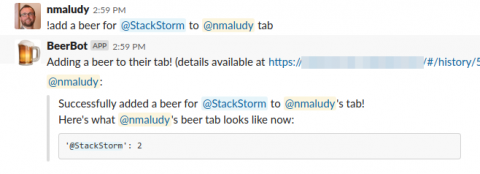
StackStorm can’t pour you a beer. But now it can keep track of who owes you a beer! Read on for more info about the new beertab pack, and other new packs & interesting StackStorm Exchange updates.
If you have deployed a Java application in production, you’ve probably encountered a situation where the application suddenly starts to take up a large amount of CPU. When this happens, application response becomes sluggish and users begin to complain about slow response. Often the solution to this problem is to restart the application and, lo and behold, the problem goes away – only to reappear a few days later.
One of the great promises of serverless has always been that it would free developers to focus on writing code without having to give too much consideration to the underlying infrastructure. But the advantages presented by the instantly, infinitely scalable nature of serverless come with limitations and unique considerations that you need to take into account.
The PagerDuty Incident Response Process is a detailed document that provides a framework for how to structure your incident response process. But sometimes it helps to understand how these seemingly abstract concepts play out during real-world scenarios. You can now hear an incident call recording that’s based on a real PagerDuty incident. Due to the nature of incident response practices, the process guide we publish is filled with very explicit details regarding a variety of situations.
These days, a major part of most IT budgets is the cloud bill. But unlike server-bound infrastructure budgeting, cloud bills can be unpredictable and highly variable from month to month. However, if organizations embrace cloud cost optimization to regulate cloud bills and avoid surprises, they’ll find themselves with considerable found money that can be reinvested into other areas.
In the 20th century we were programmers. In the 21st century, developers. With the massification of telecommunications worldwide, operators began to help us in our work. That’s where the term DevOps (“developers” and “operations”) arose, which implies the concept of collaboration of both teams. But since change is the only constant, other practical considerations have forced us to see the entire forest instead of just a few trees.
Ever wondered what’s under the hood of your neighbors’ car, the situation in their wallet or the configuration of their serverless stack? Well wonder no more! Today we will bring you the statistics of Dashbird so you could compare your Lambda functions with others. Unfortunately, the car and the wallet thingy you should figure out on your own. Let’s start… (I hope you like charts)