Grafana Labs + Taboola Tel Aviv Meetup
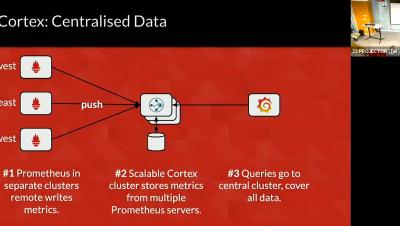
Taboola was kind enough to host the Grafana Labs meetup at their wonderful offices in the Atrium tower for an afternoon of metrics, logs, traces, and good times!


Mattermost 5.21 includes improvements that will help your team work together more effectively. Some of these improvements, including the following ChatOps integration and plugins, were built during our successful open source chatbot hackfest that brought together 2,000 contributors from around the world.
In the past, IT asset management and IT service management processes have been separate disciplines with different objectives and goals. Given this reality, Ivanti recently surveyed over 1600 IT professionals to better understand the alignment of asset and service management processes. Some results weren’t surprising. Laptop and desktop computers are the most common managed assets, while niche industry-specific devices are the least managed. Our key finding, however, is clear.
With the current focus on social distancing and other health precautions, service management leaders are probably already thinking about short-term implications of these rapidly incoming changes. The large-scale increased use of remote work is one implication. This might be a new option or an immediate mandatory requirement for all employees. Regardless, many IT organizations may not be ready.
We have talked about it for a long time, but now it is here: The Icinga DB RC1 In case you managed to avoid all of the talk about it, Icinga DB is the replacement for our IDO (Icinga Data Output). What does this mean for you? It means SPEED. Especially for larger environments. So, what’s in the RC? It is basically a finished product. We want to give both you and us some time to test it out, find bugs and get comfortable with it.
Information technology (IT) never slows to a standstill. Technological change disrupts current processes or operations, requiring organizations to make alterations to IT spending. Deviating from legacy technology to 21st century advancements isn’t an option, it’s a requirement! Through automation and powerful integrations, organizations can breathe freely.
Why is monitoring microservices so important? It’s because we work in a time where systems are complex, distributed across multiple microservices. For example, even a simple e-commerce app may have Ordering, Product Catalog, and Shipping services. Our tooling and practices sometimes struggle to keep up with such complexity.