Nexthink CEO Pedro Bados appears on BBC World News
Watch Nexthink CEO Pedro Bados talk about some of the key drags on workplace productivity and what nexthink is doing to fix it.


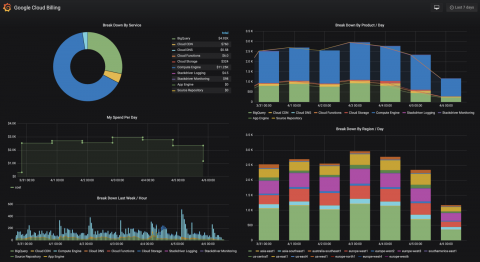
The Grafana community comes up with some pretty cool stuff, and we’re hoping to spotlight some of it from time to time. Today, we’re starting with the BigQuery datasource plugin developed by the team at DoiT International. DoiT is a reseller of Google Cloud and AWS that helps companies either move from on premise to cloud or move from one cloud provider to another.
Getting started with Kubernetes is really easy. In just a matter of minutes you can set up a new cluster with minikube, kops, Amazon EKS, Google Kubernetes Engine, or Azure Kubernetes Service. What isn’t so easy is knowing what to do after you set up your cluster and run a few apps. One of the most important parts of setting up a Kubernetes cluster is to make sure your cluster is secure. In this blog post, we will go over some of the strategies you can use to help secure your Kubernetes cluster.
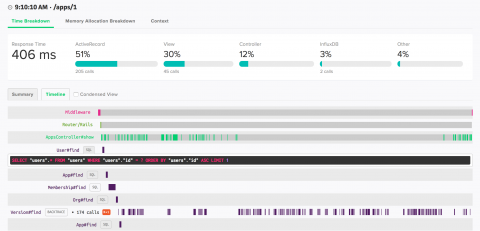
Today we're happy to announce that our transaction timeline view has exited BETA and is now generally available for Ruby.
One of the biggest challenges with text-based communication is that oftentimes context, emotions, and intentions can get lost in translation. On the other hand, when we speak to one another, we have the advantage of inflection, tone, and body language to help convey our points effectively. Historically, adding context to text-based communications involved writing HTML code—something that was a bit too complicated for the average internet user.
One of these problems is that Kubernetes has no login process. Ordinarily, the client software would initiate this login flow, but kubectl does not have this built in. Kubernetes leaves it up to you to design the login experience. In this post, I will explain the journey we took to get engineers logged in from the terminal and the challenges we faced along the way. The first step to SSO was to set up Dex as our Identity Provider.
Making the move to DevOps can be a daunting undertaking, with many organizations not knowing where to start. I recently had some fun taking a few DevOps assessments to see what solutions are currently in the market. I varied my answers from an organization that fully embraced DevOps to an organization at the beginning of its journey.